Joint Comfort Formula Review Does It Really Help with Pain
Living with joint pain changes how you move through your day. Watch this video review of Balmorex Pro, with supporting context, key considerations and practical takeaways from the…
Living with joint pain changes how you move through your day. You stop swinging your arms when you walk, you adjust your hips before you even notice, and you get used to “stiff” starting earlier than you'd like. So when someone offers a product promising joint comfort, it's not curiosity driving you. It's hope, mixed with the caution that comes from having tried other things that didn't quite land.
I looked closely at the Joint Comfort Formula, including what people say in a real-world setting, and whether the experience matches the promise. This is a practical review, not hype. The goal is to help you decide if the joint comfort formula is likely to support your pain relief routine, and what to watch for along the way.
What the Joint Comfort Formula Is Actually Aiming to Do
The most helpful way to evaluate a joint comfort formula review is to focus on mechanism in plain language. Joint discomfort usually has a few overlapping drivers, like inflammation, mechanical irritation, and stiffness that builds up when you move less. A product aimed at “joint comfort” typically tries to support the body in one or more of those areas.
From what's been marketed, the Joint Comfort Formula positions itself as a supportive approach rather than an instant fix. That matters, because pain relief from supplements is rarely dramatic on day one. It tends to show up as small shifts, for example:
- Less “grinding” feeling when you get moving in the morning
- Fewer spikes after a longer walk or a busy day
- Easier range of motion, even if you still have bad days
In my view, that type of outcome is more believable than promises like “pain disappears.” If you’re already managing a condition with medical care, supplements can still play a role, but they should fit alongside your plan, not replace it.
A Quick Note on Pain Expectations
If your pain is severe, rapidly worsening, or accompanied by swelling, redness, fever, or a sudden loss of function, that's a medical situation, not a supplement situation. Joint support products can be part of self-care, but they cannot safely stand in for evaluation.
What Effectiveness Looks Like in Real Life
When people ask about effectiveness joint comfort formula, they often mean one of two things: “Does it help at all?” and “How soon?” Based on patterns in user feedback joint comfort formula style, the experience usually comes in one of these routes.
Some users report noticeable comfort after consistent use, often describing relief that feels gradual. They tend to frame it as “I can do more without paying for it later,” which is exactly what many joint support routines aim for. Others notice minimal change, or they feel benefits only in certain situations, like during light activity but not during flare-ups.
Timeline Expectations That Feel Realistic
A common approach is to evaluate over a short trial window while keeping your routine stable. For example, if you can track:
- Morning stiffness duration
- How long you can move comfortably before discomfort rises
- Whether steps, stairs, or standing time feel less punishing
That kind of tracking can prevent the frustrating cycle of, “I took it for a week, felt nothing, quit,” when the product is designed for longer-term support.
The Trade-offs People Don't Always Mention
The biggest trade-off with any supplement is that your results depend on consistency and lifestyle. If you’re sleeping poorly, working through flares, or still doing high-impact activity without modifying, you may not feel what the product could offer in a calmer setting.
Another trade-off is that joint comfort products can feel subtle, so it's easier to dismiss them when you’re craving fast relief. I’ve seen people get frustrated because their expectations are essentially “medication speed,” but most joint support is not built that way.
Balmorex Pro Joint Support Review Insights from User Feedback
You asked specifically for a Balmorex Pro joint support review angle, and that's where the “does it really help” question becomes more grounded. Reviews are useful because they reflect a messy reality. People aren't lab specimens, they’re managing their own bodies, schedules, and limitations.
In the user feedback joint comfort formula category, recurring themes tend to look like this:
- Some people report better comfort after consistent use
- Others say it takes longer than they hoped
- A portion of users report limited effects or inconsistent results
It's important to treat that information as direction, not proof. One person can have a clear benefit because the product aligns well with their needs, while someone else may not respond for completely different reasons, like the type of joint issue they’re dealing with or whether they’re in a flare cycle.
What I Pay Attention to When Sorting Feedback
When reading a joint comfort formula review, I try to separate signal from noise. I look for reviewers who mention context rather than just a score. For instance, “It helped my knees when walking” is more useful than “It worked” with no detail.
Here are a few factors that often correlate with clearer outcomes:
- Consistent daily use
- Using it during periods of manageable symptoms
- Pairing it with movement you can tolerate, like gentle walking
- Not switching multiple products at once
- Keeping expectations realistic about gradual changes
That doesn't guarantee results, but it helps interpret the feedback without getting swept up by the loudest voices.
How to Decide If It's Worth Trying for Your Pain Relief Routine
If you’re considering the joint comfort formula for pain relief, the decision should be practical. You should know what you’re using it for, what “success” looks like, and when to stop if it isn't helping.
Before you start, consider safety and fit, especially if you take other medications or have known allergies. Check the ingredient panel and dosing guidance on the label, and if you have any medical conditions, it's reasonable to ask your clinician whether it fits your plan.
Here's a simple way to evaluate whether it's worth your time:
- Pick a clear goal, like reducing morning stiffness or improving comfort during short walks
- Start with your normal routine unchanged for a few days
- Track 2 to 3 specific indicators (stiffness, range of motion, activity tolerance)
- Commit to a short trial period with consistent use, then reassess honestly
- If you see no meaningful shift, adjust your approach rather than chasing hope indefinitely
When It May Not Be the Right Match
Joint comfort supplements may feel disappointing if your pain is mainly driven by something mechanical that needs targeted therapy, like a movement pattern issue, a joint instability, or a strength imbalance. They can still help, but they might not be enough to move the needle if the core problem is structural.
Also, if you’re in an intense flare, you may feel more comfort from immediate strategies, like rest, heat or cold therapy, and clinician-guided care. A supplement can be a support tool, but it's not usually the first lever for sudden flare-level pain.
The Bottom Line on “Does It Really Help” for Joint Comfort
The honest answer to “does it really help with pain” is that the Joint Comfort Formula appears to work for some people, with benefits that are typically described as gradual and comfort-based rather than instant. The effectiveness joint comfort formula question is best answered with a mindset of gradual support, not a cure fantasy.
If you’re the kind of person who tracks your days, stays consistent, and expects improvements like “I can move a bit better” rather than “I'm pain-free,” you’ll likely get a more accurate read. And if you’re careful about safety, pair the supplement with reasonable movement, and treat flare-ups with appropriate care, you give yourself the best chance of getting real-world value.
Pain relief is personal. The goal is not to find the single perfect product, it's to find the right support that makes your everyday life feel manageable again.
Related video pages
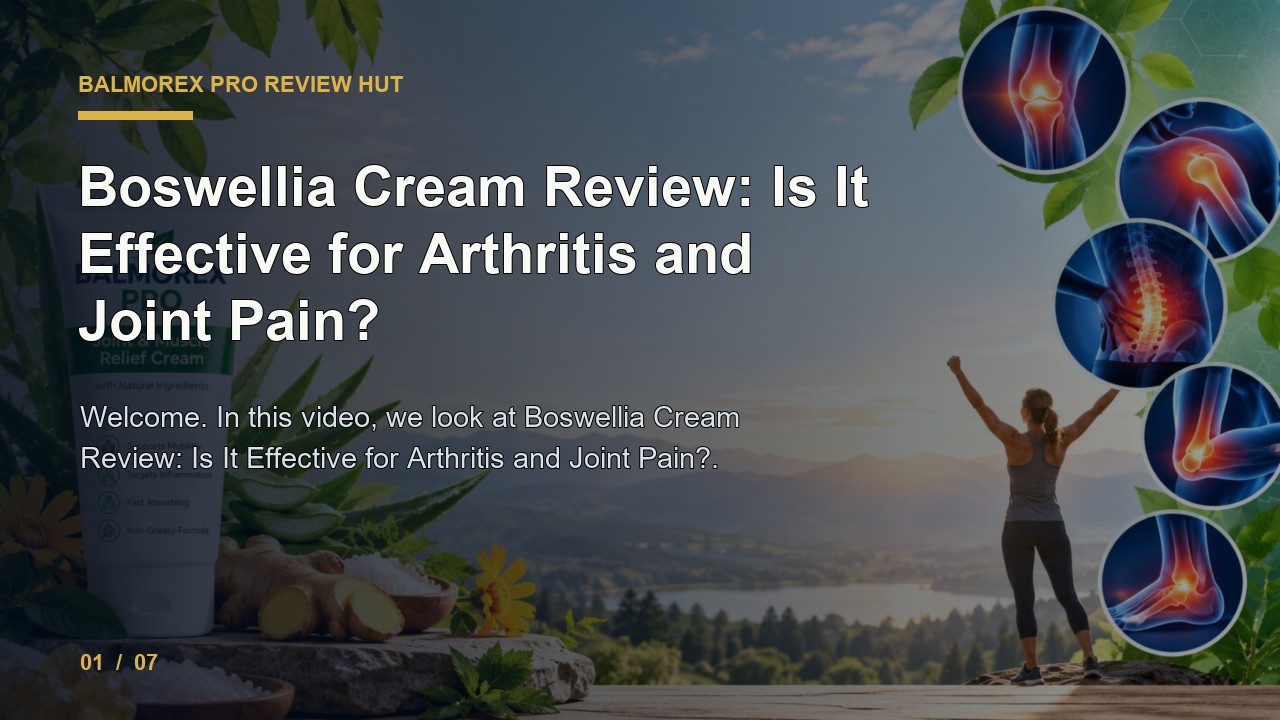 2:53Boswellia Cream Review Is It Effective for Arthritis and Joint Pain
 2:35Are Fast Pain Relief Creams Worth It an Honest Review
 2:28Aloe Vera Pain Cream Review Soothing Relief for Muscle and Joint Pain
 2:48Review the Most Effective Topical Back Pain Creams of 2024
 2:16Herbal Pain Creams a Review of the Most Effective Natural Options
 2:27Balmorex Pro Official Website Review Features Offers and User Experience