Review the Top Creams for Sore Muscles That Actually Provide Relief
Sore muscles have a way of stealing momentum. Watch this video review of Balmorex Pro, with supporting context, key considerations and practical takeaways from the accompanying article.
Sore muscles have a way of stealing momentum. You can still move, but everything feels slightly heavier, tighter, and more stubborn than it should. If you have dealt with back tightness after a long day at a desk, or the familiar ache after a workout you did not scale down enough, you know the frustrating part. Pain does not always knock you out, but it keeps creeping back whenever you sit, bend, or try to sleep.
Topical creams can help, and not in a vague “maybe it will” way. When a cream is formulated for muscle soreness, it can cool the area, reduce inflammation, and calm irritated nerves that are sending discomfort signals. The trick is choosing a cream that matches the kind of soreness you are dealing with, and using it correctly so you are not wasting product or aggravating sensitive skin.
What follows is my review lens for cream for sore muscles relief, focused on real-world scenarios like delayed onset soreness, post-workout tightness, and localized back or shoulder muscle discomfort. I will keep this practical, because muscle recovery is not helped by guesswork.
How to Judge a Cream for Muscle Soreness Relief Before You Buy
Most “sore muscle creams” look similar on the shelf. What matters is what they do to the skin and the underlying tissue, and how quickly you notice a difference. I pay attention to four things, because they determine whether a product feels helpful the same day or only after you forget you applied it.
1) Your Soreness Type: Warm, Tight, or Sharp
Not all soreness is the same. For example:
- Warm, achy, and diffuse soreness often responds well to menthol-like cooling or gentle warming depending on your skin tolerance.
- Stiff tightness after sitting can sometimes feel better with products that create a soothing, localized effect.
- Sharp, pointy discomfort or pain that flares with movement needs caution. Topicals can assist comfort, but if pain is severe or rapidly worsening, you should not try to muscle through it.
2) Speed and Feel
Some creams are fast acting muscle pain creams, meaning you get a change within minutes due to menthol, camphor, or warming ingredients. That does not automatically mean the cream is stronger. It just means you feel it quickly, which can be enough to make stretching and daily movement less miserable.
3) Skin Tolerance and Fragrance
A cream that stings, dries, or leaves a lingering burn can become the reason you stop using it. If you have sensitive skin, look for gentler bases and avoid heavy fragrance if you react to scented products.
4) Where You Apply It
A cream that works great on a thigh can be tricky on the lower back because the area is harder to reach and sweat more. A rub-in balm or cream with good slip tends to spread more evenly, which matters for even relief.
With those guardrails in mind, here are the categories that consistently earn a spot in my rotation for muscle recovery topical treatments.
The Top Cream Categories That Actually Deliver Relief
There is no single “best” cream that fits everyone, but certain formulations tend to earn trust because they behave predictably. I'm going to review the categories the way you would compare tools for a job, not as marketing claims.
Cooling Gels and Menthol-based Creams
If your sore muscles feel hot or your ache is coupled with a sense of tension, menthol-based products often provide immediate comfort. I like them for evenings after a workout, especially when you want to unwind without feeling the soreness spike every time you shift positions.
Best when: - soreness feels warm - you want quick comfort to help you sleep - you are dealing with tightness around shoulders, calves, or forearms
Trade-offs: - If you overapply, the area can feel too cold, which can make you tighten up instead of relax. - Some people experience irritation, especially on already sensitive or freshly shaven skin.
Topical Anti-inflammatory Style Creams
These are the products people reach for when soreness feels more than “just ache.” They aim to reduce inflammation signaling locally, which can be particularly helpful for back tightness that lingers after a busy day, or discomfort that worsens with repeated movement.
Best when: - soreness persists across days - pain feels aggravated by activity - you need relief that holds, not just a cooling sensation
Trade-offs: - Results can feel slower than menthol, because you are not getting a strong sensory hit right away. - They may require more consistent application patterns to notice the benefit.
Salicylate-based Muscle Rubs
Salicylate creams have a long history in topical pain relief, and while everyone reacts differently, they often feel effective for localized discomfort. I tend to recommend them when the soreness is clearly centered in one region, like a sore hamstring after training or a specific spot along the lower back where you can point with your finger.
Best when: - the pain is localized - you prefer a more “classic” muscle rub feel - you want comfort that supports movement and stretching
Trade-offs: - These products can be irritating for some skin types, particularly if you apply over broken skin or right after a hot shower when pores are more reactive. - You have to use the right amount. Too little is underwhelming, too much can feel uncomfortable.
Warming Creams and Heat-leaning Balms
Heat-leaning topical treatments can feel excellent for stiffness, especially if your soreness is more rigid than inflamed. I often use these earlier in the day or before mobility work, because warmth can make you more willing to move through gentle ranges.
Best when: - stiffness is the main issue - soreness feels tight and guarded - you want help with pre-movement comfort
Trade-offs: - If your muscle feels truly inflamed or hot, warming can make it feel worse. - Some balms leave a sticky residue that transfers to clothing or sheets.
My Best Sore Muscle Cream Review Approach for Three Real Scenarios
When people ask for the best sore muscle cream review, they usually mean, “Which one would help me right now?” So I'm going to map creams to situations, the way they show up in daily life.
Scenario 1: Post-workout Soreness That Peaks Later
You train, you feel fine during, then you wake up the next day tight. This is classic delayed soreness behavior. In my experience, cooling tends to give the fastest “I can move” feeling, while anti-inflammatory style options are more about steady improvement across the next day.
What I do: - Start with a cooling menthol-based gel in the evening. - If it is still clearly sore by the next day, I rotate to an anti-inflammatory style cream and apply consistently. - I keep it off directly on irritated skin and I avoid stacking multiple strong products at the same time.
Scenario 2: Back Tightness After Sitting
Back pain from sitting is often about muscle guarding and irritated tissue that does not fully calm down. For this, I care about comfort that lasts long enough for you to stand, walk, and stretch without the ache ramping up.
What I do: - If the area feels stiff and tight rather than hot, I choose a warming cream or a soothing rub that supports relaxation. - If it feels inflamed and tender, I lean toward an anti-inflammatory style cream. - I apply after a shower when the skin is clean and dry, because rubbing effectively matters. I do not just dab and walk away.
Scenario 3: Localized Muscle Soreness from Overuse
If your forearm, calf, or shoulder has one stubborn spot, a salicylate-based muscle rub style product can make a difference. It is often less about broad coverage and more about targeting the exact area that triggers you.
What I do: - I use a small amount and spread it until the area looks evenly coated, not glossy with excess. - I focus on the painful zone plus a small border around it, since muscle soreness often involves the surrounding tissue too. - I pair the topical with gentle movement, like slow stretching or short walks, because topical comfort works best when the muscle is allowed to relax.
Here is the reality I want you to feel: a cream for muscle soreness relief is not a substitute for rest or smart movement. But it can turn a bad day into a manageable one.
How to Use Muscle Recovery Topical Treatments Without Wasting Them
You can buy the right cream and still feel disappointed if application is off. The “best” topical results usually come from small habits, not perfection.
A quick checklist that works for me:
- Apply to clean, dry skin.
- Use the amount directed on the label, then rub in fully.
- Wash your hands well after application.
- Avoid heat sources right after warming creams if your skin is sensitive.
- Stop if you notice burning, rash, or worsening discomfort.
A few practical rules also help:
- Do not apply over broken skin. If you have a rash or irritation, you are basically turning the product into a problem.
- Give it time. Fast-acting creams can feel helpful within minutes, but even so, I wait at least a few hours before deciding it “did nothing.”
- Track what happens over 24 hours. Muscle soreness relief tends to show up as changes in stiffness and tolerance, not just an instant disappearance of pain.
If you are dealing with back pain that includes numbness, weakness, or pain that shoots down the leg or arm, do not rely on topical creams alone. Topicals can support comfort, but nerve symptoms deserve proper medical attention.
What to Look for in the Next Time You Shop
When people tell me they tried creams before and nothing worked, I usually ask one question: “Did you match the cream to the soreness type, and did you use it consistently enough to give it a chance?” Most of the time, the issue is not that topicals never work. It is that the product selection and the timing were off.
For many readers, the win is simple. Choose a cooling option for quick comfort after workouts. Choose an anti-inflammatory style cream when soreness lingers. Choose a warming cream when stiffness is the main enemy. That combination covers most of what muscle recovery topical treatments are meant to handle, and it keeps your relief grounded in what your body is actually doing.
Related video pages
 2:30Balmorex Pro Review: Top 5 Fast Acting Joint Pain Solutions Reviewed for Quick Relief
 2:28Aloe Vera Pain Cream Review Soothing Relief for Muscle and Joint Pain
 2:18A Comprehensive Review of Popular Elbow Pain Creams in 2024
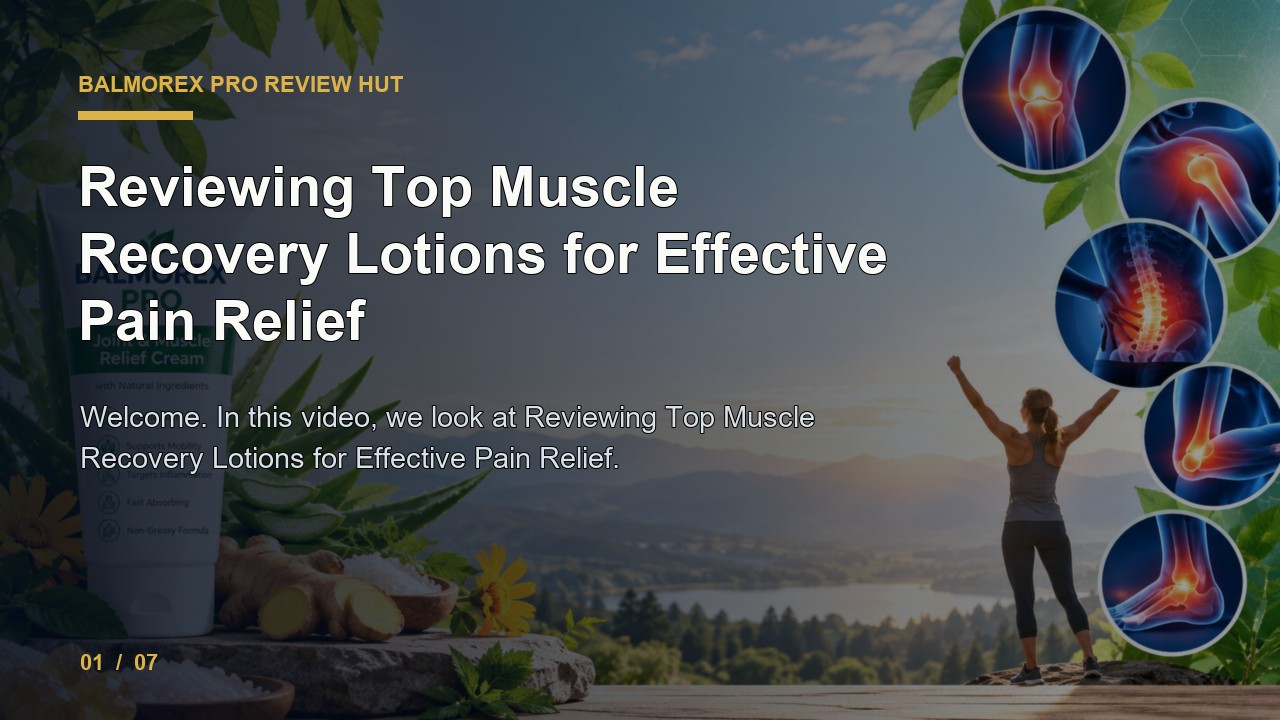 2:22Balmorex Pro Review: Reviewing Top Muscle Recovery Lotions for Effective Pain Relief
 2:35Are Fast Pain Relief Creams Worth It an Honest Review
 2:18Is Balmorex Pro Worth Buying at Discounted Prices an Honest Review