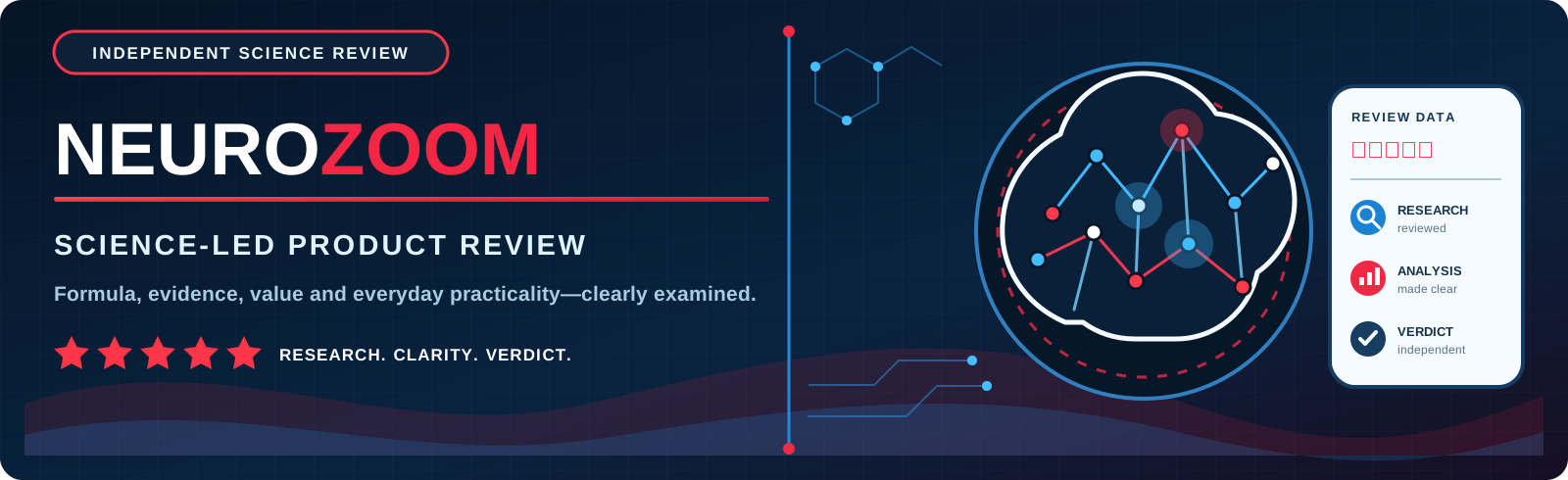
NeuroZoom Review: Exploring the Benefits of Nootropics for Brain Health Enhancement
Why people reach for nootropics when brain health matters. Watch this video review of NeuroZoom, with supporting context, key considerations and practical takeaways from the accompanying…
Exploring the Benefits of Nootropics for Brain Health Enhancement
Why People Reach for Nootropics When Brain Health Matters
When someone starts looking into brain health, the goal is usually simple, even if the experience isn't. They want to feel sharper, think more steadily, and recover faster when life gets noisy. That could mean juggling deadlines without the “mental fog” that shows up mid-afternoon. It could mean reading the same paragraph twice because attention keeps slipping. Or it could be the quieter issue, like noticing that recalling names or staying on-task takes more effort than it used to.
That's where nootropics enter the conversation. Some people call them cognitive enhancers, but the phrase that tends to match real life is more practical: tools for brain performance. In my experience, most readers are not chasing some futuristic superpower. They want a modest edge, something that supports mental clarity nootropics, helps reduce the feel of fatigue, or makes it easier to stay organized under pressure.
Still, it helps to be honest about what “brain boosting” can mean. Nootropics are not a substitute for sleep, stress management, or medical care. They are also not identical for everyone. The biggest difference I’ve noticed between people who benefit and people who do not is expectation. When the goal is measured and personalized, nootropic benefits for brain function can be easier to spot. When the expectation is maximal and immediate, disappointment tends to follow.
The Types of Nootropic Benefits for Brain Health Enhancement
Brain health is broad, so “benefits” show up in different ways. I like to frame them in three buckets, because it makes decision-making less confusing.
Mental Clarity and Attention Support
Some brain boosting nootropics are used with the hope of improving focus and reducing distractibility. This is not the same as “more energy” in the gym sense. Attention support often feels like this: tasks become easier to start, fewer things compete for your mind, and you stay with what you’re doing without constantly re-orienting.
What to watch for is how clean the focus feels. If a compound makes you jittery, it can actually worsen clarity by increasing cognitive noise. A steady, calm sharpness tends to be a better sign than an exaggerated “wired” feeling.
Memory, Learning, and Mental Endurance
Other nootropic benefits for brain health cluster around learning and recall. These effects are usually subtle. People describe better retention after reading or a smoother ability to retrieve information later.
In practical terms, I’ve found that people notice memory support most when they pair it with effortful learning. You can't out-supplement weak study habits. But when you’re already practicing spaced repetition, consistent note-taking, and deliberate review, certain supplements may help the brain cooperate better with that routine.
Mood Steadiness and Stress Resilience
A third area involves emotional steadiness. Brain health is not only about cognition, it's also about how the brain responds to stress. Some nootropics are used to soften irritability, reduce rumination, or create a calmer mental baseline.
The trade-off here is important. If a product makes you feel emotionally flat or sleep gets worse, that is a red flag for brain health long term. Mood support should feel like steadiness, not suppression.
How to Choose Nootropics Thoughtfully, Not Impulsively
If you’ve ever tried to search for nootropic benefits online, you’ve likely seen dramatic claims. My approach is more grounded. Brain health enhancement is an experiment you run on yourself, with guardrails.
Here are the questions I'd ask before choosing anything.
- What specific brain problem am I trying to improve?
Focus, recall, mental fatigue, or stress reactivity are very different targets. - What is my baseline routine already like?
Sleep consistency, protein intake, hydration, and movement strongly affect perceived cognitive performance. - How will I measure results?
A simple log helps: note the time of day, what you were doing, and whether clarity was calm or shaky. - What side effects am I willing to tolerate, and which ones are deal breakers?
Headaches, anxiety, insomnia, and digestive changes are common “stop signals.” - Am I stacking too many variables?
If you change sleep, caffeine, supplements, and workload in the same week, you won't learn what helped.
A practical detail that matters more than people expect is timing. Mental clarity nootropics often have a window where they fit naturally, like morning or early afternoon, depending on their effect profile. If you take something that's too stimulating later in the day, the next day's brain performance can suffer because sleep architecture gets disrupted. Even when the “today” boost feels good, the next-day cost can quietly erase it.
A Note on Caffeine and Cognitive Enhancers Advantages
Many people combine nootropics with caffeine because the effects can feel complementary. The advantage is straightforward: caffeine can improve alertness, while another ingredient might support focus or reduce the sense of mental strain.
The risk is also straightforward: caffeine plus an overactive supplement strategy can tip you into jitteriness, faster distraction, or anxious energy. If you’re sensitive, you may need less caffeine than you think you do. Or you may need to shift your timing, so your nervous system stays calm while you work.
Common Ingredients People Consider for Brain Boosting Nootropics
I'm not going to pretend there is one “best” formula for everyone. Still, there are ingredient categories that show up repeatedly in real-world use. When people talk about cognitive enhancers advantages, the conversation often centers on a few well-known options.
Some common examples include:
- L-theanine, often used to promote a calmer attentional state, especially alongside caffeine.
- Caffeine, for alertness, with many people adjusting dose to avoid the wired, distractible feeling.
- Creatine, used by some people to support cognitive energy, particularly when sleep is tight or training is intense.
- Omega-3 fatty acids, discussed in the context of brain health support, typically through dietary intake or supplements.
- Magnesium, sometimes used when people suspect stress, poor sleep quality, or muscle tension is affecting cognition.
Even within these categories, response varies. Two people can take the same supplement at the same dose and experience very different outcomes. That's why your “experiment design” matters.
Safety, Expectations, and Knowing When to Pause
Brain health enhancement should feel responsible, not reckless. Nootropic benefits for brain function should not require you to fight your own body. If you’re chasing clarity but you start feeling emotionally off, can't fall asleep, or notice persistent headaches, that's your cue to pause and reassess.
Here are practical signs to slow down: - Your sleep becomes lighter or harder to maintain. - You feel anxious, overly driven, or mentally scattered. - Your stomach becomes irritated or appetite changes sharply. - You need higher doses to get the same effect. - You stop feeling “you” and start feeling like you’re running on something external.
I also encourage readers to treat nootropics like any other health variable. If you’re on prescription medications, pregnant, trying to conceive, or managing a neurological or psychiatric condition, it's wise to involve a clinician. Even when ingredients seem mild, interactions can be unpredictable.
Finally, set expectations that match how brains actually work. Many mental performance changes are gradual. Some people notice improvements within days, others take longer to determine whether it's truly helping. The best indicator is not a single productive afternoon, but whether your overall week feels steadier, your attention holds longer, and your recovery feels better.
Related video pages
 2:27NeuroZoom Review: Reviewing the Most Effective Brain Detox Supplements in 2026
 1:55NeuroZoom Review: Mental Clarity Boosters That Can Enhance Brain Health Naturally
 2:50NeuroZoom Review: Nootropic Benefits vs. Traditional Brain Supplements Which Is Better
 2:12NeuroZoom Review: Alternatives to Traditional Memory Improvement Supplements for Cognitive Health
 2:12NeuroZoom Review: Are Brain Health Vitamins Effective What Science Says in 2026
 2:03NeuroZoom Review: Beginner's Guide to Choosing the Right Cognitive Enhancement Supplement