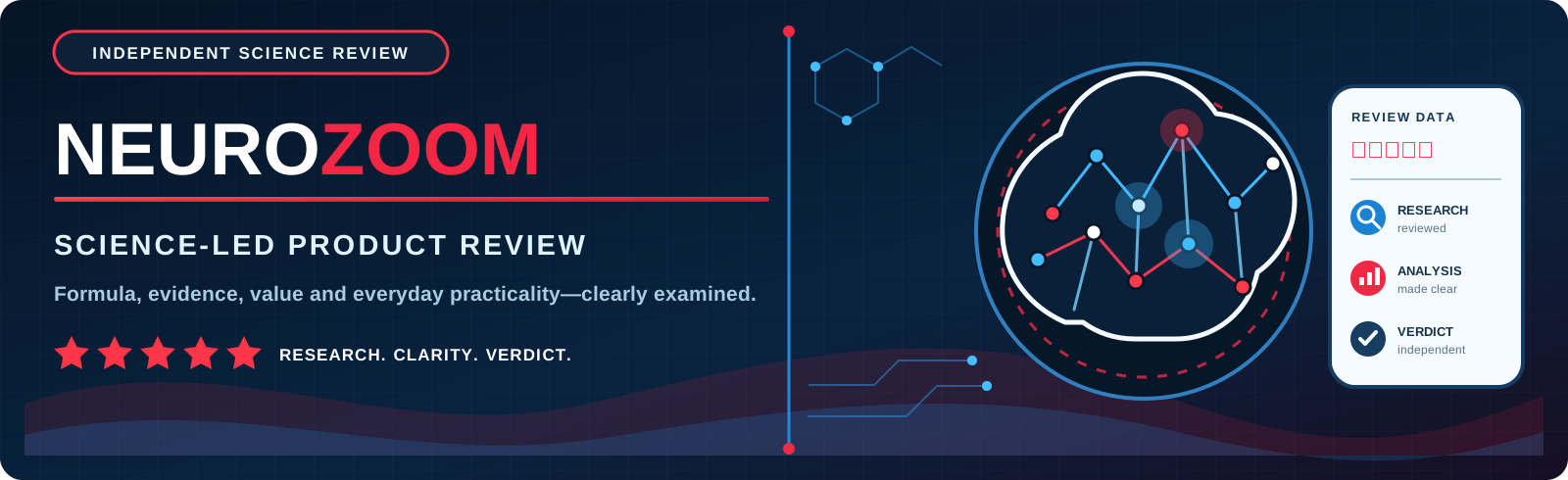
NeuroZoom Review: How to Choose the Right Focus and Concentration Aid for Your Brain Health Needs
Choosing a focus and concentration aid can feel strangely personal. Watch this video review of NeuroZoom, with supporting context, key considerations and practical takeaways from the…
How to Choose the Right Focus and Concentration Aid for Your Brain Health Needs
Choosing a focus and concentration aid can feel strangely personal. You are not just picking a product, you are deciding how you want your brain to show up on a random Tuesday when your attention is scattered, your sleep was messy, and your to-do list has no mercy. And the truth is, most people do not need “more focus” so much as they need the right kind of support for their specific brain health needs.
If you are trying to navigate this space, you are probably asking yourself a few practical questions: What should I look for? What should I avoid? How do I tell if something is helping rather than just making claims?
Let's make that easier.
Start with What's Actually Happening to Your Attention
Before you compare ingredients or brands, pause and name the problem you are trying to solve. “Low focus” can mean several different things in real life, and a good choosing concentration aids strategy starts with matching support to the pattern.
In my experience helping people sort this out, the most useful step is asking what your attention looks like over a few typical work blocks. For example:
- Are you having trouble starting tasks, even when you care about them?
- Do you start fine but drift after 15 to 30 minutes?
- Do you feel mentally foggy, like you are moving through thick air?
- Do you feel restless or distracted, but your mind is still “busy” rather than blank?
Different patterns can point toward different needs. A focus supplements for brain health approach is more likely to fit when you consider whether your main issue is initiation, maintenance, mental clarity, or emotional calm. Even subtle differences matter because they change what “success” should feel like.
Quick Reality Check for Expectations
A focus and concentration aid should not feel like a switch flipping from distracted to genius. For many people, better support shows up as smoother transitions, fewer thought derailments, and faster recovery after interruptions. If you expect instant, dramatic effects, you may judge a helpful option as “not working.”
Also, some days are simply not days for supplements to compensate. If you are short on sleep, dehydrated, or carrying acute stress, even the best mental focus products will work only within limits.
Read Labels Like a Detective, Not a Fan
When people ask me about choosing concentration aids, they often start with branding, reviews, or who endorses what. That can mislead you. Labels matter more.
Start by checking the basics that shape real-world experience: ingredient list clarity, dose transparency, and whether the product is designed for daily use or short-term support. Then look at how ingredients are presented. Vague wording is a red flag, especially when the label does not clearly state what is included.
What to Prioritize on the Label
Use this mental checklist while comparing options. Try to keep it focused on what affects brain health and day-to-day concentration:
- Specific ingredient names and amounts (not just blends)
- Dose alignment with the way you intend to use it (morning, midday, or as needed)
- Formulation clarity (for example, whether it is designed for mental focus rather than general wellness)
- Third-party testing indicators when available, or at least strong quality documentation
- No unnecessary “kitchen sink” stacking if your goal is straightforward focus and concentration
If you see a product that bundles many complex ingredients without giving you clear quantities, it becomes hard to know what you are actually responding to. That matters because you may need to adjust based on how your brain feels.
Trade-offs Worth Considering
More is not always better. I have seen people combine multiple supplements for mental focus, then feel jittery, anxious, or oddly wired. That “wired” sensation often becomes a clue that the support is not matching the needs you described earlier, or the dose is simply too high for your baseline.
If you are sensitive to stimulatory effects, start low and go slow, even if the label suggests a standard dose. Your goal is steady attention, not a roller coaster.
Match the Aid to Your Brain Health Needs, Not Just Your Schedule
A concentration aid guide should address timing, because timing changes the way a supplement feels. It is one thing to take a focus and concentration aid on a calm day, and another thing to take it when your nervous system is already stretched thin.
A helpful way to approach this is to connect the aid to your daily rhythm:
- If you want support for morning initiation, you may benefit from something that helps mental clarity and readiness.
- If you are struggling with afternoon drift, your choice may need to emphasize sustained attention and recovery from earlier cognitive load.
- If you are using a supplement because you are doing focused tasks under interruption, the aid should ideally help you return to the task without aggravating stress.
A Practical Way to Test Without Overreacting
Instead of trying five products at once, give one option enough time to show its pattern. Pay attention to how it affects:
- Your ability to begin
- Your ability to stay with one task
- Your mental clarity and “fog”
- Your emotional tone, like irritability or calm
If it helps, you should notice it consistently across similar days. If it only “works” on one unusually good day, treat that as noise, not proof.
Watch for Side Effects and Interactions, Especially with Ongoing Meds
Brain health support can be useful, but it has to be safe in your specific context. Supplements can still affect how you feel, and they can interact with medications. If you are taking prescription drugs, have a medical condition, or you are pregnant, it is wise to check with a clinician before using focus supplements for brain health, particularly those with ingredients that can influence alertness.
Even without medications, pay attention to signals like headaches, stomach upset, changes in sleep, or a shift toward anxiety. These can happen when an aid is too stimulating, not a good fit for your baseline, or taken at the wrong time.
A Short List of “Pause and Reassess” Signs
If you notice any of the following, stop using the product and reassess your plan before trying again:
- Increased jitteriness or restlessness
- Sleep becomes harder or less restorative
- Headaches, nausea, or unusual digestive discomfort
- Feeling emotionally sharper in a negative way, like irritability
- No improvement after consistent use at the recommended dose
This is not about fear, it is about good judgment. A focus and concentration aid should support your brain health needs, not create new problems that quietly erode your attention.
Build a Focused Routine Around the Aid, Not Around Hope
One of the most common mistakes with choosing concentration aids is treating them like magic. In practice, a supplement works best when your habits give it a fair chance.
You can think of it as one tool in a system. Even small adjustments can make the difference between “it did nothing” and “I finally stayed on track.”
Here is how I have seen people create that supportive context without turning life into a science project:
- Take the aid at the same time each day for the trial window
- Pair it with a simple focus ritual, like starting a task with a 10 minute timer
- Keep hydration steady, because dehydration can mimic “brain fog”
- Protect sleep as much as your schedule allows, since sleep loss undermines attention
- Avoid stacking multiple new supplements in the same week
The goal is to make changes one at a time, so you can learn what your brain actually responds to.
If you are dealing with a specific focus and concentration challenge, choosing the right focus supplements for brain health becomes much more manageable when you treat it like matching support to a pattern. Clarify what is happening to your attention, read labels carefully, test with patience, and watch how your body and mind respond.
You deserve focus that feels steady, not forced. When you pick a concentration aid that respects your brain health needs, your attention stops feeling like a daily negotiation.
Related video pages
 2:35NeuroZoom Review: Reviewing the Top Memory Improvement Supplements for Effective Brain Performance
 2:19NeuroZoom Review: Comparison of Top Focus and Concentration Aids for Better Mental Performance
 1:58NeuroZoom Review: Comparing Popular Cognitive Enhancement Supplements for Mental Performance
 1:55NeuroZoom Review: Mental Clarity Boosters That Can Enhance Brain Health Naturally
 2:15NeuroZoom Review: Reviewing Popular Mental Clarity Boosters for Improved Focus in 2026
 2:41NeuroZoom Review: Problem Solving for Low Cognitive Function What Works Best