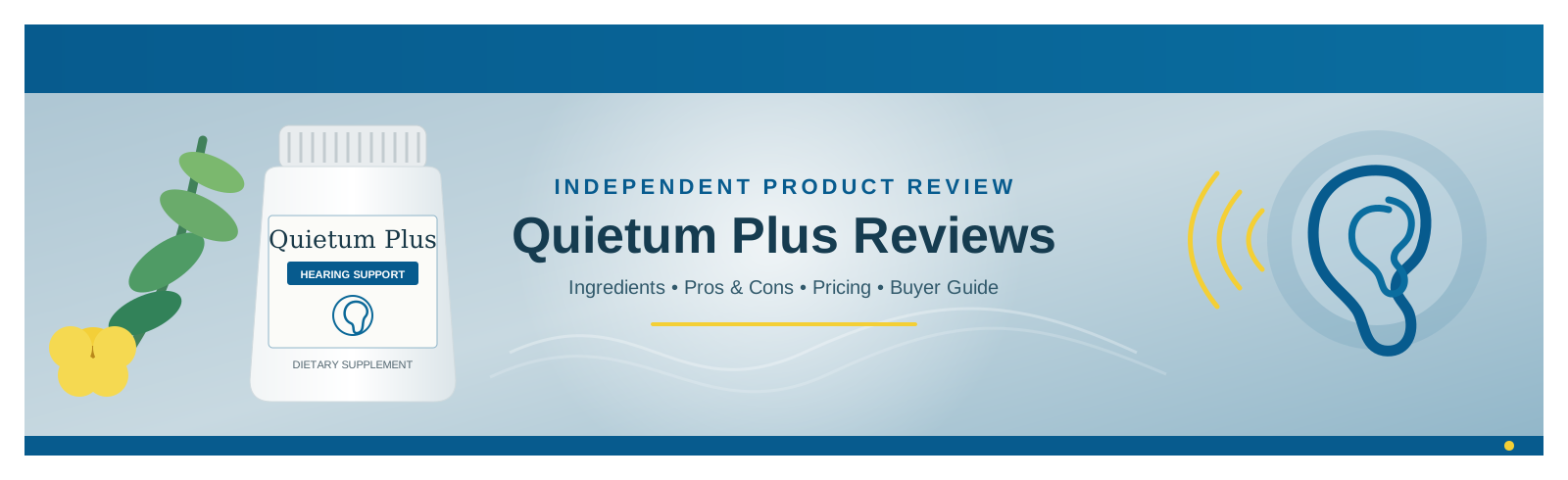
Review Are Quietum Plus Fake Products Ruining Your Tinnitus Relief Experience
Living with tinnitus changes how you measure time. Some days you can ignore the sound, other days it seems to sit right behind your eyes.
Living with tinnitus changes how you measure time. Silence feels rare. Some days you can ignore the sound, other days it seems to sit right behind your eyes. When you start looking for a tinnitus relief supplement, you are not chasing a trendy wellness label. You are trying to get your attention back, to stop your nervous system from treating that ringing like an emergency.
That is exactly why the question behind this Quietum Plus review matters. If fake products are circulating, they do not just waste money. They can also disrupt your routine, delay real help, and leave you wondering whether your tinnitus is getting worse or simply that the product you tried never had a fair chance to work.
What “Fake Quietum Plus” Usually Means in Real Life
When people say “fake,” they are often talking about different problems that can look similar on the surface:
- A bottle that looks right, but the contents are not what you expected
- A product sold under a similar name, but not from the same distribution channel you intended
- A listing that promises results, while the actual supplement is inconsistent from batch to batch
- Labels or packaging that feel off, even if you can't immediately prove it
The important part is this: tinnitus is sensitive to routine. If you buy something that does not match the advertised formula, or you receive a product that is improperly manufactured, your experience can quickly turn from “maybe this helps” into “nothing makes sense anymore.” And once you are stressed, your tinnitus can spike just from the frustration alone.
I have seen this pattern in the messages people share after trying Quietum Plus genuine reviews or comparing options online. They often describe a timeline like this: first few days feel normal, then they start to notice subtle changes, then the effect stops, and later they realize they may not have received what they thought they ordered. Sometimes the ringing never improves, but what hurts more is the uncertainty. Uncertainty keeps you checking, second-guessing, and listening harder than you need to.
How Counterfeit Supplements Can Affect Your Tinnitus Relief Experience
A tinnitus relief supplement review has to go beyond “does it work” and look at what the process feels like. When the supplement is genuine, you can track your response with at least a little confidence. When it is fake, the feedback loop gets distorted.
Here are the most common ways fake Quietum Plus effects show up in a real user experience:
-
Inconsistent dosing If the amount of active ingredients is uneven or diluted, you might feel nothing, or you might get tiny shifts that do not hold.
-
Different ingredients than expected Some people are sensitive to certain fillers or additives. For tinnitus, that can mean you react more sharply, even if you never link it to the product right away.
-
Quality and absorption issues Even when a label claims the right formula, the manufacturing quality matters. Your body may not process the contents the same way, which can flatten any potential benefits.
-
False hope followed by disappointment This one is emotional, but it is real. If you start believing you are on the right track, then suddenly stop getting any changes, stress rises. Stress often makes tinnitus more noticeable.
-
Bad timing If you switch products repeatedly to “test” outcomes, you lose your baseline. Tinnitus relief is rarely linear, and changing variables makes it much harder to tell what is helping.
I want to be careful here. Not every stalled result means you got fake Quietum Plus. Tinnitus has many drivers, hearing status varies widely, and some people simply do not respond to a supplement approach. Still, counterfeit products add a layer of noise that makes it harder to find what actually fits your body.
Quietum Plus Real vs Fake: Signs You Can Watch for Before You Order
You do not need a chemistry degree to spot suspicious patterns. While no single sign proves anything on its own, the combination can give you a clearer picture of whether you are taking a safe route.
Here are a few practical red flags tied to Quietum Plus real vs fake concerns:
- Price that seems too good to ignore
- Product pages that do not clearly explain where the item is sourced from
- Packaging details that look rushed, blurry, or inconsistent
- Seller behavior that discourages questions or returns
- Claims that sound absolute, especially around “guaranteed cure” language
If you are comparing Quietum Plus genuine reviews, pay attention to how specific the reports are. People who mention their routine, the timing of any changes, and how they tracked their symptoms tend to be more believable than reviews that sound scripted. Not perfect, but helpful.
Also, keep your expectations grounded. A tinnitus relief supplement review that is honest about timelines is usually more useful than one that predicts instant quiet. When your tinnitus is loud, “soon” can feel urgent. But your nervous system often needs steadier signals to settle.
A Quick Personal-style Check You Can Do at Home
If you decide to try Quietum Plus, treat it like an experiment with guardrails. For example, track your tinnitus loudness at the same time each day, and note any triggers you can control such as caffeine changes, sleep disruptions, or loud noise exposure. If the product later feels questionable, your notes can help you tell whether the change was real or just chaotic.
What to Do If You Suspect You Received a Fake Product
If you think you might have gotten something questionable, it is worth taking action without turning your whole life into a full-time investigation. The goal is to protect your health, reduce stress, and rebuild clarity.
Here is a simple approach that helps many people move forward:
-
Pause and reassess If you are seeing no improvement or you suspect the source is unreliable, stop continuing the routine long enough to reduce added uncertainty.
-
Check what you ordered versus what arrived Compare label details, batch information if present, and the exact product name.
-
Document your experience Write down what you noticed, when you noticed it, and any side effects. Even a short log can clarify the pattern.
-
Contact the seller or support channel Ask directly about authenticity, sourcing, and return options. Keep the tone factual and calm.
-
Re-evaluate your next step If you choose to try again, prioritize a safer purchasing route and stick to one product long enough to judge it properly.
It is tempting to keep buying replacements until you find the “right” one, but that usually worsens tinnitus distress. Your brain learns to scan for the next variable, and tinnitus thrives on attention.
Quietum Plus Reviews and Results: Why Authenticity Changes the Story
Quietum Plus Reviews & Results content often gets flattened into “it worked” or “it didn't.” In practice, the most valuable stories are the ones that describe the middle ground: the person who noticed a slight shift in how they processed the sound, then hit a wall, then realized they were using a product they could not verify.
When readers ask whether Quietum Plus fake products are ruining their tinnitus relief experience, what they usually mean is: “Why does this feel unreliable?” The answer can be the product itself, the source, or the stress of uncertainty. But the result is the same. Your tinnitus experience becomes harder to interpret.
If you are considering trying Quietum Plus, aim for clarity from the start. Choose a purchase path you can trust, take notes on your tinnitus patterns, and give yourself enough time to see whether your nervous system responds. Authenticity does not guarantee success, but it does give you something precious: a fair test.
And with tinnitus, a fair test is often the difference between feeling hopeful and feeling stuck.
Related video pages
 1:54Quietum Plus Review: Is the Quietum Plus Bottle Worth It Reviewing Results and User Experiences in 2026
 2:18Real Quietum Plus User Reviews Does It Really Help Tinnitus
 2:16Tinnitus Herbal Remedies That Really Work Reviews and Results
 3:05Quietum Plus Honest Review and Scam Investigation for Ear Ringing Relief
 2:20Review of the Best Inner Ear Supplements for Tinnitus Relief in 2026
 2:36Are Hearing Support Capsules Effective for Tinnitus Relief an Honest Review