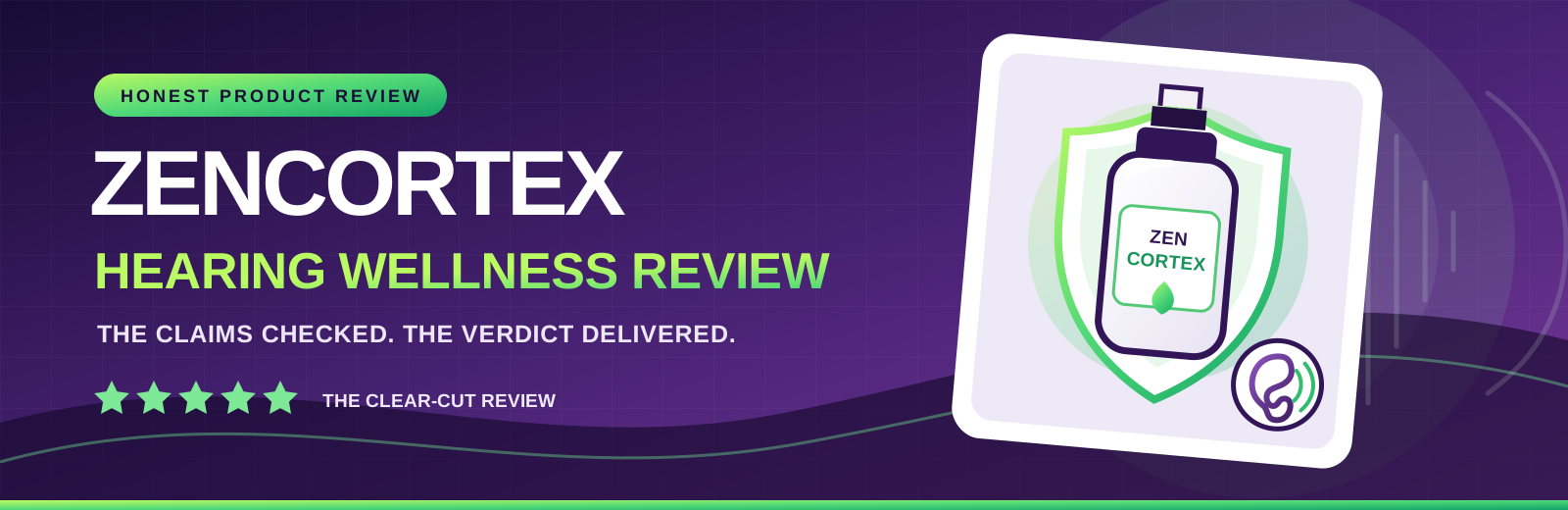
Is a Tinnitus Supplement Worth It Honest Reviews and User Feedback
If you are living with tinnitus, you already know how relentless the sound can feel. Watch this video review of ZenCortex, with supporting context, key considerations and practical takeaways…
If you are living with tinnitus, you already know how relentless the sound can feel. One day it is background noise you can ignore, the next day it sharpens into a constant tone that makes sleep, concentration, and even casual conversation feel harder than they should. That is why “tinnitus supplement worth it” is such a common question among ear-health shoppers.
I cannot promise a supplement will silence tinnitus. No product can honestly make that promise. But I can help you think through what users report in real life, what tends to help, what tends to disappoint, and how to evaluate a product like ZenCortex with the least amount of guesswork.
What “Tinnitus Supplement” Really Means in User Feedback
A lot of tinnitus supplement reviews sound similar on the surface. People describe the same core experiences: ringing that fades slightly, sound sensitivity that eases, and fewer hours spent obsessing over the tone. But the details matter, because tinnitus is not one uniform condition.
In practical terms, most user stories fall into a few patterns:
Why Two People Can Both “Try the Same Supplement” and Report Different Results
Tinnitus has multiple drivers. Hearing loss, ear wax buildup, jaw tension, stress, medication effects, and sleep disruption can all influence what you hear. Even when the tinnitus “sound” is the same, the body pathways behind it can be different.
In my own conversations with people who share tinnitus symptom relief supplement experiences, the best signal comes from how they describe the timeline and the context, not just whether they “felt better.”
- Some notice changes only after they fix sleep and reduce stress, then the supplement gets the credit.
- Others notice improvement within days, but it tracks with less caffeine or improved hydration.
- A smaller group sees slow shifts over weeks, and those changes usually come with broader habits like reduced noise exposure.
That is why reviews often look contradictory. The product may be doing something, but the person's environment and baseline matter just as much.
Honest Review Themes I See Around ZenCortex and Similar Products
When people talk about ZenCortex reviews and results, they are usually trying to answer a very specific question: “Is this supplement worth my time and money, given what I have already tried?”
Here are the most consistent themes that show up in user reviews tinnitus supplements, especially for “ringing relief” products:
1) People Report “Partial Relief,” Not Total Silence
The most believable feedback is not “it vanished.” It is more like “it is quieter,” “the pitch softened,” or “I stop noticing it as much during the day.” In other words, the supplement seems to reduce intensity or attention, not remove the sound entirely.
2) Nighttime Wins Are Common
Many users describe better sleep first, then improved daytime focus. That matches how tinnitus often behaves, because the quieter the brain gets, the less your attention locks onto the sound. If a supplement supports calming routines, reduces perceived strain, or helps you sleep more deeply, tinnitus frequently feels less intrusive.
3) the “Expectation Gap” Causes Disappointment
Some people expect instant relief, stop too early, or ramp up doses without guidance. When nothing changes right away, they declare the product useless. In reality, tinnitus often requires consistent exposure to any supportive intervention plus time to observe trends.
4) Noise Exposure and Ear Health Habits Decide the Ceiling
A supplement can be a support, not a shield. Users who also reduce loud headphone time, improve ear protection at concerts or power tools, and keep up with hearing care tend to report better outcomes. Those who keep volume high often report that tinnitus “comes back” quickly.
5) Side Effects Are Usually the Deciding Factor for Switching or Stopping
Not everyone tolerates supplements well. Some people mention stomach discomfort, headaches, or feeling “wired.” Even if the ingredient blend is generally well tolerated, bodies vary, and tinnitus sufferers are already dealing with stress and sleep strain.
That is why it is useful to read user feedback with a “fit” lens, not just “did it work for them?”
How to Evaluate Whether a Tinnitus Supplement Is Worth It for You
If you are deciding whether to try ZenCortex or another tinnitus supplement, treat it like an experiment with guardrails. You are not looking for perfection, you are looking for a signal.
Here is a practical way to judge tinnitus supplement worth it without falling into hype.
A Simple Screening Checklist Before You Spend Money
- Are you actively protecting your ears from loud sound right now?
- Have you ruled out obvious ear issues like wax buildup or sudden changes that need medical attention?
- Are you tracking your baseline, not just hoping to notice a difference?
- Are you sleeping poorly or under heavy stress, which can amplify perceived tinnitus?
- Do you have realistic expectations about partial relief?
This checklist is not about blame. It is about recognizing what can make a supplement look good or look useless even when it is not the main driver.
Keep Your Tracking Grounded in What Matters
A common mistake in tinnitus symptom relief supplements is measuring the wrong thing. The “ringing volume” is hard to quantify. Attention and irritability are easier to track, and they matter for quality of life.
A simple approach is to note: 1. How loud the tinnitus feels on a 0 to 10 scale 2. How much it interrupts work or conversation 3. Sleep onset time and whether you wake up to the sound 4. Any patterns with caffeine, stress, or noise exposure
If you do that for a few weeks, you get more clarity than reading a dozen testimonials.
What User Reviews Often Miss: Edge Cases and Trade-offs
Most reviews focus on “did it help.” Fewer people address the edge cases where supplements may not be a good fit.
When Supplements Are Unlikely to Be the Main Answer
From the feedback I have seen across tinnitus supplement experiences, there are situations where the product effect tends to be smaller or inconsistent: - Sudden hearing changes or one-sided tinnitus that progresses quickly - Tinnitus linked to a medication change, where timing matters more than supplements - Active jaw or neck problems that drive symptom flare-ups - Ongoing loud exposure that keeps the auditory system irritated
In these cases, a supplement might still be supportive, but it is rarely the core solution.
The Biggest Trade-off: You Can Waste Time
The emotional cost is obvious, but there is also a practical one. If you spend months taking a supplement while ignoring ear-care basics or a medical red flag, you lose valuable time. If you notice a sudden shift, persistent worsening, or new hearing loss, it is smarter to pause supplement trial decisions and talk with a clinician promptly.
Interactions and Tolerance
Even though many users tolerate wellness supplements fine, tinnitus sufferers often take other products, including sleep aids or anxiety supports. That combination can blur the outcome and increase side effects like dizziness or nausea. When people report “it worked but I felt awful,” that is not a minor detail. It is part of whether the tinnitus supplement is worth it.
Where ZenCortex Fits in a Realistic Tinnitus Routine
I do not recommend treating a tinnitus supplement like a single lever you pull once and forget. The more successful user stories tend to treat it as one part of a broader ear-health plan.
For people considering ZenCortex reviews and results, the most useful way to view it is as a support that may help with perceived intensity and day-to-day intrusiveness, especially when paired with consistent ear protection and better sleep habits.
A common pattern in user feedback is this: the supplement does not “fix everything,” but it takes the edge off enough that the person can stop fighting the sound all day. That matters. Tinnitus is not only the signal in your ear, it is the way your brain reacts to it. Anything that reduces stress load, supports routine stability, and improves sleep can indirectly reduce how dominant tinnitus feels.
If you are going to try a tinnitus supplement, make it a measured trial, not a blind purchase. Track the variables you can control. Protect your ears. And be honest with yourself about what kind of change you are expecting.
That is the difference between chasing hope and making a decision that feels responsible.
Related video pages
 2:09Review of Hearing Supplement Safety Standards and Regulations in 2026
 2:28Hearing Health Review Evaluating Popular Supplements for Hearing Support
 3:02ZenCortex Review: Reviewing Effective Daily Hearing Support Supplements in 2026
 2:16Are Natural Hearing Drops Effective a Comprehensive Review in 2026
 2:56Comparing Hearing Wellness Reviews Which Products Deliver Real Results
 2:46Comprehensive Hearing Health Review What Works and What Doesn't in 2026