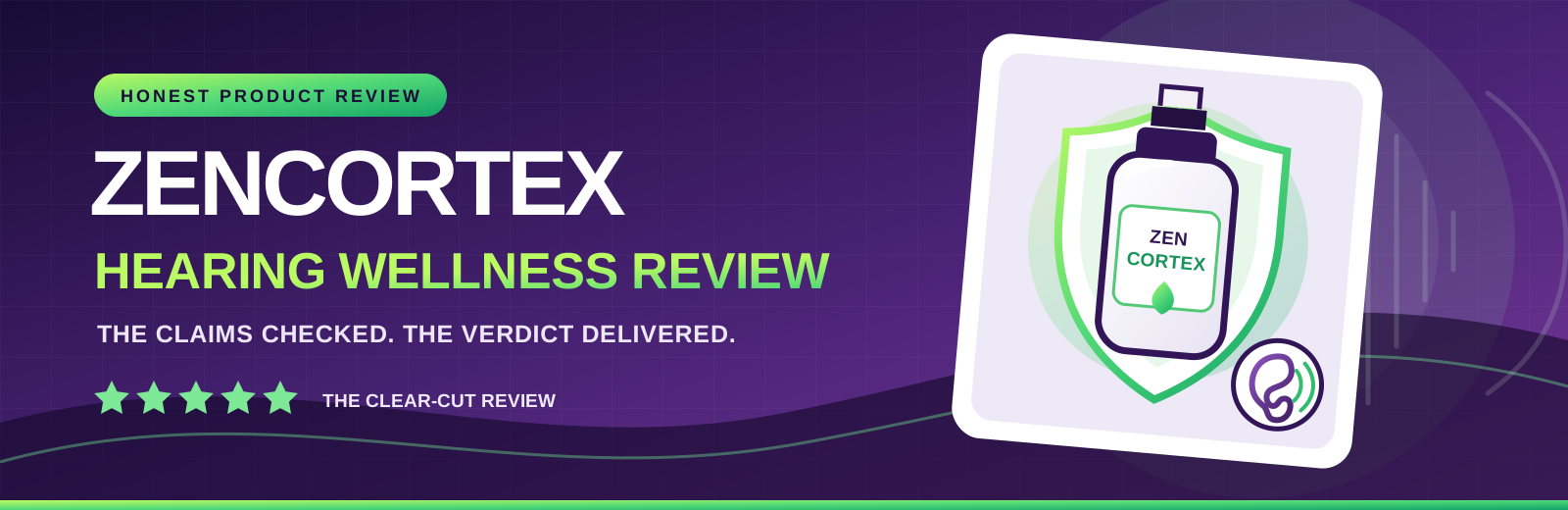
Comparing Hearing Wellness Reviews Which Products Deliver Real Results
What “real results” look like in hearing wellness reviews. Watch this video review of ZenCortex, with supporting context, key considerations and practical takeaways from the accompanying…
What “Real Results” Look Like in Hearing Wellness Reviews
When people search for a hearing wellness review, they usually want one of two things: reassurance that a product can help, or confirmation that what they are buying is not just marketing noise. The frustrating part is that hearing changes are rarely dramatic overnight, and that is where many comparisons go wrong.
From a practical standpoint, real results tend to show up as measurable improvements in day-to-day communication and comfort. Not everyone reports the same kind of benefit, but common themes appear across credible feedback:
- Speech clarity improves in specific settings, especially one-on-one conversations
- Background noise becomes less exhausting, even if it is not eliminated
- Reduced ear discomfort, pressure, or fatigue after listening
- Better sound awareness over time, not just a temporary “boost”
- Fewer moments of “I think it's working” followed by a quick drop-off
One reason comparisons vary so much is that hearing wellness products are not all trying to solve the same problem. Some focus on supporting ear physiology, others emphasize comfort and environmental tolerance, and some blend ingredients that target inflammation, oxidative stress, or neural support. If a product does not align with your main issue, reviews will read like a mixed bag even when the product is doing what it claims.
A credible hearing wellness product comparison should therefore start with a match between symptom type and expected outcome. Otherwise, you end up evaluating the wrong product for the wrong scenario, then concluding that the entire category fails.
Reading Trusted Hearing Wellness Reviews Without Getting Misled
A review can be sincere and still be unhelpful. I’ve seen this pattern in multiple ear health conversations, and it often comes down to how the reviewer describes timing, baseline symptoms, and what changed after starting.
Here's what I look for in trusted hearing wellness reviews when comparing products for ear health:
- Baseline clarity: Does the person explain the hearing issue type, like muffling, ringing, difficulty following speech in noise, or soreness after loud environments?
- Timeline honesty: Do they state when they noticed changes, and whether improvements were gradual or immediate?
- Consistency of use: Were they taking the product daily as directed, or did they skip often?
- Where results show up: Some benefits appear during conversations, others show up as less listening fatigue. Reviews that name the setting are more useful than vague claims.
- What did not change: The best reviews mention limitations. A product that helps one aspect may not restore hearing thresholds or replace medical care.
Quick Reality Check for Common Review Claims
If you compare products only by the most dramatic claims, you will likely end up disappointed. For example, a person who had a sudden, severe change in hearing or significant dizziness should not interpret any wellness product as an alternative to evaluation. That is less about skepticism and more about safety and timing.
Also, many “works instantly” stories tend to come from expectations or placebo effects, especially when users start taking a product at the same time they change other habits, like lowering exposure to loud sound or using better hearing protection. These variables matter because they can mimic benefit.
How to Evaluate Ear Health Product Effectiveness for Your Situation
The phrase real results hearing supports is appealing because it sounds objective, but effectiveness is personal. The key is separating “possible support” from “guaranteed outcome,” and matching product design to likely need.
A disciplined way to compare options is to break effectiveness into three buckets: perceived listening comfort, communication performance, and symptom rhythm.
1) Listening Comfort and Ear Fatigue
Some products are most noticeable when they reduce fatigue after extended listening. People often describe fewer headaches, less pressure, or reduced soreness after workdays with calls, meetings, or background music. If your main problem is discomfort more than clarity, these reviews tend to make sense.
Trade-off: If your primary concern is hearing clarity in noise, comfort improvements may not translate into better speech recognition.
2) Speech Clarity and Conversational Confidence
When users report better clarity, it is usually tied to specific moments, like understanding a partner across a dinner table or catching details in a meeting. The best hearing wellness review narratives include examples, not just ratings.
Trade-off: If clarity improves only in one environment, do not assume broad restoration. Hearing involves multiple pathways, and wellness support often targets limited mechanisms.
3) Symptom Rhythm, Like Ringing or Muffling
Some people use hearing wellness products to manage recurring issues, such as intermittent ringing or on-and-off muffling after congestion or sound exposure. In these cases, the most persuasive comparisons are the ones that track whether symptoms flare less often or resolve quicker.
Trade-off: If symptoms are progressive, frequent, or accompanied by pain, discharge, sudden one-sided loss, or dizziness, you should treat wellness products as secondary, not primary.
Comparing Products Like a Buyer, Not a Believer
When readers ask me which product “delivers real results,” I usually respond with a question: what problem are you trying to solve. That is because an honest comparison should consider fit, expectations, and measurement.
Here are the comparison signals I use when deciding between candidates based on reviews and real-world use patterns:
- Review concentration: Do you see similar outcomes from many users, or only a handful of extreme reports?
- Mismatch tolerance: Do reviewers with similar symptoms still report benefit, or is it all over the place?
- Time-to-effect: Do changes cluster around a plausible usage window, rather than random days?
- Side effects in context: Are adverse experiences described clearly, and do they relate to dosage or sensitivity?
- Sustainable routines: Do users still feel benefit after weeks, not just the first few days?
A useful habit is to shortlist two or three products, then compare them against your own baseline. For example, if you struggle most with speech in noise, you want reviews that mention restaurants, offices, or group conversations. If you are mainly dealing with discomfort from sound exposure, you want reviews that emphasize ear fatigue, sensitivity, or post-exposure calm.
The Dosage and Product Format Issue People Skip
Reviewers often mention when they took the product, but they do not always mention how strictly they followed the dose. That matters. Some formulations require consistent daily use to see a pattern, while others may feel more noticeable when taken at a specific time.
In comparisons, pay attention to whether people report:
- Skipping doses and losing benefit
- Needing time to notice a change
- Feeling effects only when used alongside other habits, like reduced loud exposure
- Confusing “feels different” with “actually clearer”
Even within the category of ear health product effectiveness, formats can behave differently. A supplement you take daily can influence comfort over time, while a product designed for topical soothing may feel more immediate but not necessarily improve communication clarity.
Where ZenCortex Reviews Fit in an Ear Health Comparison
Within ZenCortex Reviews & Results, the most useful angle is not whether any single product claims to “fix hearing.” It is whether user reports show improvements that match the mechanisms the product is designed to support, and whether those improvements show up in real listening scenarios.
When you compare ZenCortex to other hearing wellness options, focus on three things that tend to reveal whether hearing wellness product comparison data will hold up for you:
- Whether reviewers describe changes that matter to communication, not just comfort
- Whether benefits appear consistently across users with similar symptom patterns
- Whether limitations are acknowledged, such as partial improvements or environment-specific results
If you are using reviews to decide, treat your first month as a structured experiment. Keep track of what situations feel harder than before, then note whether conversations get less effortful, whether you tire less after calls, and whether symptom flare-ups become less frequent. If a product does not show any meaningful movement in that window, it is usually a sign to reassess rather than keep hoping.
The most reliable outcomes in the ZenCortex Reviews & Results cluster come from people who already understand what “better” should look like for their ear health, not just people chasing the idea of a universal fix. Comparing hearing wellness reviews becomes far less confusing once you separate curiosity from a clear, symptom-specific goal.
Related video pages
 2:27Comprehensive Hearing Supplement Review What You Need to Know in 2026
 2:27Is the Latest Hearing Formula Worth Trying an in Depth Review
 2:48Hearing Formula Review Key Ingredients and User Experiences in 2026
 2:19A Comprehensive Review of the Best Ear Health Formulas in 2026
 2:16Are Natural Hearing Drops Effective a Comprehensive Review in 2026
 2:38A Comprehensive Review of Treatments for Ear Ringing in 2026