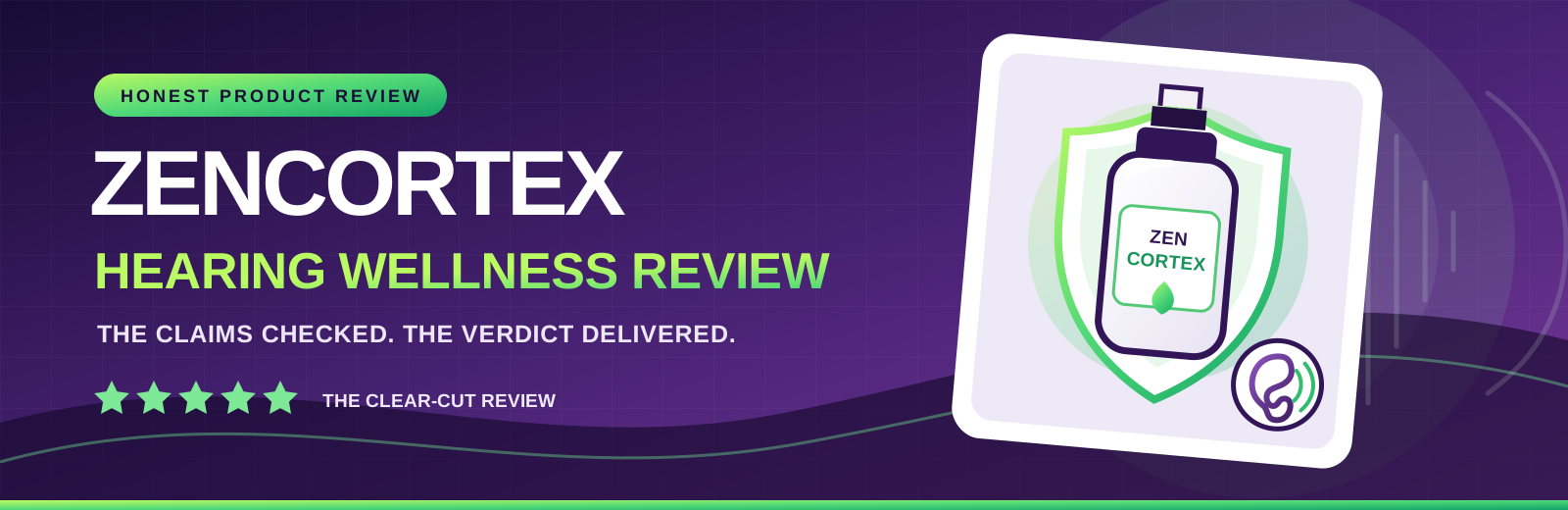
Is the Latest Hearing Formula Worth Trying an in Depth Review
Is the Latest Hearing Formula Worth Trying?. Watch this video review of ZenCortex, with supporting context, key considerations and practical takeaways from the accompanying article.
What This “Latest Hearing Formula” Is Actually Trying to Do
When people ask whether a hearing formula is worth trying, they usually mean one of two things.
First, they want something that supports clearer hearing when sound feels muffled, distant, or tiring after a few hours. Second, they want a supplement-like option that fits into real life, without turning every day into a medical appointment.
The challenge is that “hearing health” is not a single problem with one fix. Hearing is a system. The ear's outer structures capture sound, the inner ear converts it into nerve signals, and the brain processes those signals. Add age-related changes, noise exposure, chronic inflammation, and existing ear conditions, and you get a complicated picture.
So, the most practical way to evaluate the latest hearing formula is not to ask whether it sounds promising, but to assess whether its ingredients and dosing approach match what people typically experience, and whether the product is realistic about expected outcomes.
In my experience reviewing ear health products in the ZenCortex Reviews & Results space, the “worth it” answers tend to fall into patterns. People who benefit usually report gradual improvements in listening comfort, reduced mental fatigue during conversations, or better clarity in challenging environments. People who feel disappointed often had expectations for a dramatic, quick change, or they have an underlying issue that supplements simply cannot correct.
How to Evaluate Effectiveness Without Falling for Hype
A good hearing formula review is less about marketing language and more about how the product lines up with the user's goal and constraints. Here's what I look at first.
1) Ingredient Strategy and What It Can Realistically Support
Supplements can support the body's normal functions, including antioxidant pathways, tissue maintenance, and metabolic health. But they cannot rebuild damaged hair cells or reverse structural ear damage on demand. If a product positions itself as a direct “fix” for hearing loss, that's your first red flag.
The more credible formulas tend to focus on supporting factors tied to ear health, like oxidative stress balance and micro-environment support in the body. Even then, results are usually described as supportive, not corrective.
2) Dose Clarity and the “Minimum Effective” Question
A formula can have all the right ingredients and still be underdosed. I look for straightforward labeling that makes it clear how much of each ingredient you’re actually taking each day. If the brand is vague, you can't evaluate the likelihood of an effect.
In real-world routines, consistency also matters. The best ingredient plan in the world doesn't help if someone forgets doses because the serving size or timing is inconvenient.
3) Timeline Realism: What Improvements Tend to Look Like
Hearing support often shows up as subtle changes. For some users, that means they stop noticing how “effortful” conversations feel. Others notice a difference when there's background noise, like a café or a busy household.
I’ll be blunt about expectations. If you’re hoping to go from “I can't follow speech clearly” to “everything is crystal” within days, you’re setting yourself up for frustration. Support products can be helpful, but they usually operate on a slower curve.
4) Safety and Tolerability, Not Just Potential Benefits
Tolerability is where many people quietly lose interest. Some formulas are gentle; others can cause mild stomach discomfort. If you already have reflux, sensitive digestion, or a history of supplement intolerance, it matters.
If you are on medications, it is also worth checking ingredient interactions with a clinician. I'm not saying supplements are inherently risky, but ear-related concerns often overlap with broader health conditions, and safety decisions should be deliberate.
My Hands-on Assessment: What to Expect When You Try This Formula in 2026
I can't claim medical certainty or promise outcomes, but I can share the kinds of patterns I’ve seen when people in the ZenCortex Reviews & Results community try a new hearing support product.
What “Worth Trying” Typically Looks Like
When the latest hearing formula is a good fit, users often describe improvements in how sound feels rather than a sudden jump in hearing thresholds. Common experiences include:
- Conversations requiring less concentration
- Less fatigue after long listening sessions
- Hearing that feels slightly more “present,” especially for speech frequencies
- Reduced “ringing annoyance” moments, when the user's symptoms are mild and stress-linked
One person I spoke with described their change like this: they hadn't realized how much mental energy they were spending “filling in the gaps” until the gaps felt smaller. That kind of shift tends to show up gradually, not instantly.
When It May Not Be the Right Move
There are also situations where a hearing formula is unlikely to deliver meaningful relief.
If you have sudden hearing loss, severe ear pain, drainage, or symptoms that come on quickly, you should treat that as a medical issue, not a supplement trial. Supplements can't substitute for evaluation in those cases.
Similarly, if your hearing difficulties are primarily from an earwax blockage, middle-ear fluid, or a condition that requires targeted treatment, you’ll likely get better results addressing the root cause directly.
A Practical Way to Test It Without Guesswork
If you’re trying the product and want to be fair to the review process, track a few specific signals rather than relying on vague impressions.
Here's what I suggest monitoring for a couple of weeks as you establish a baseline: - Listening effort during 20 to 30 minutes of conversation - Clarity of speech in mildly busy environments - Any ear fullness sensations - Perceived fatigue after the day's audio exposure - Whether you notice changes that repeat, not one-off moments
That approach helps you separate “I had a good day” from “this seems to be improving.”
The Trade-offs: Supplement Support vs. the Real Causes of Hearing Changes
The honest reason people debate whether the latest hearing formula is worth it is that supplements sit on one side of the equation, while hearing health problems often sit on the other.
Here are the biggest trade-offs I’ve seen most often:
- Support is not restoration. The formula may help with listening comfort, but it does not replace medical care for structural or acute issues.
- Noise exposure still matters. If you’re regularly using loud headphones or working around high-volume environments, you can improve the foundation, but you cannot out-supplement preventable damage.
- Sleep and stress are involved. Many ear-related symptoms track with stress load and recovery. A formula may help, but it works better when your body isn't constantly under strain.
- Individual responses vary. Two people can take the same formula and report different results because of differences in baseline nutrition, sensitivity, and overall health.
- Expectations shape outcomes. A conservative, time-bound trial paired with realistic goals tends to produce better satisfaction than a “miracle” mindset.
The best hearing health products 2026, in my view, are the ones that respect this reality. They offer support, not false certainty. They also make it easier for you to stay consistent long enough to tell whether you’re actually responding.
How This Fits Into ZenCortex Reviews & Results: the Decision Framework
Within ZenCortex Reviews & Results, the question is rarely “Does it work for everyone?” It's “Does it work for you, in the way that matters to your day-to-day life?”
So before you buy, I recommend a decision framework that matches how ear health actually shows up:
- If your symptoms are mild and stable, and you’re looking for supportive improvement in comfort and clarity, a formula trial can make sense.
- If your symptoms are sudden, severe, or painful, prioritize medical evaluation over supplement experiments.
- If you’ve already tried hearing-safe routines, like reducing loud exposure and protecting your ears, and you want additional support, a well-formulated supplement may be a reasonable next step.
- If you have GI sensitivity or are managing other conditions, make sure you can tolerate the product and confirm ingredient considerations with a clinician when appropriate.
Ultimately, the latest hearing formula is worth trying when it fits your risk level, your expectations, and your listening goals. If you want a quick fix, you’ll likely be disappointed. If you want steady, supportive changes and you can commit to consistent use, you may find it earns a place in your routine.
Related video pages
 2:35Review Top Plant Extract Formulas for Hearing Support
 2:07ZenCortex Review: Reviewing the Best Hearing Supplements for Adults in 2026
 2:21Are Hearing Supplements Worth the Investment a 2026 Review
 2:27Comprehensive Hearing Supplement Review What You Need to Know in 2026
 2:23A Comprehensive Review of Astragalus and Its Health Benefits in 2026
 3:02ZenCortex Review: Reviewing Effective Daily Hearing Support Supplements in 2026