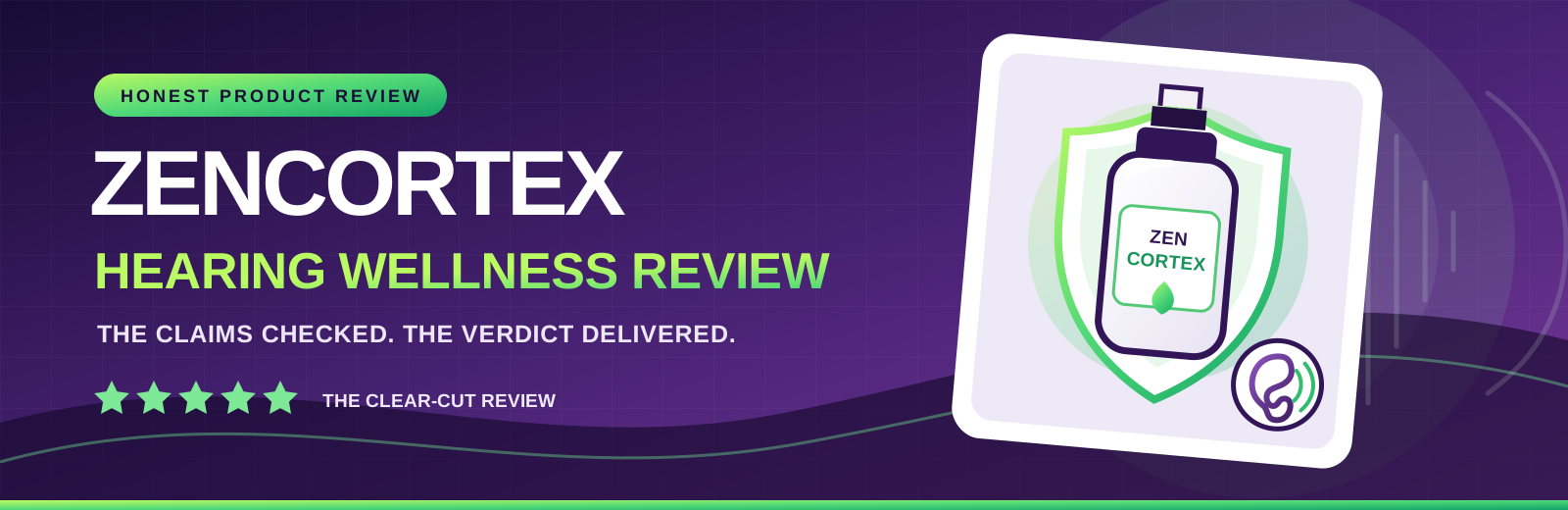
Review Top Plant Extract Formulas for Hearing Support
2026 Review: Top Plant Extract Formulas for Hearing Support. Watch this video review of ZenCortex, with supporting context, key considerations and practical takeaways from the accompanying…
2026 Review: Top Plant Extract Formulas for Hearing Support
Hearing support is one of those topics where people want certainty fast. They have ringing, muffled sound, background noise that feels louder than it should, or they notice conversations sliding away just when the room gets busy. In 2026, plant extract hearing formulas are still a major part of that search, especially for people who prefer a more “botanical” approach than strictly synthetic options.
But “natural” is not the same thing as “simple,” and a plant extract formula is only as good as its ingredient balance, standardization, and how your body is likely to handle it. Below is a practical review-style look at what stands out in plant extract hearing options for ear health in 2026, and how to evaluate them without getting pulled into marketing.
What Makes a Plant Extract Formula Matter for Ear Health in 2026?
A hearing supplement has a job: support the structures and processes involved in sound reception and signal clarity. The reality is that most formulas are not “targeting” hearing directly in the way a prescription might. Instead, they aim to support the ear environment and the body's ability to handle everyday stressors that can affect auditory function.
When I review botanical hearing supplements, I look for five things that tend to separate promising formulas from ones that are mostly cosmetic:
-
Ingredient focus that actually connects to auditory health
Broad “immune support” blends often bury ear-relevant ingredients in tiny amounts. A hearing-focused product usually gives ear-supporting botanicals more intentional presence. -
Standardization and dose clarity
“Herb extract” tells you almost nothing without a standardized component and an amount. If the label does not provide meaningful strength information, you are buying ambiguity. -
Form quality that matches the claimed effect
Some extracts are poorly absorbed unless paired with the right processing or form. You do not need to be a chemist, but you should see reasonable evidence of thoughtful formulation on the label. -
Low clutter per serving
The most useful plant extract hearing formula review conversations usually come down to this: fewer moving parts can mean fewer interactions, fewer weak fillers, and more consistent dosing. -
A realistic expectation window
For many people, the first noticeable changes are not dramatic “hearing back to normal.” Often it is better clarity, reduced effort in noise, or less noticeable ringing. Those are still meaningful, but they require consistency.
A quick lived-experience point: I have seen people try a complex blend for a week, decide it did not work, and then move on. Hearing support generally rewards steady use, especially when the goal is environmental and cellular support rather than an immediate mechanical fix.
How to Evaluate “Best Plant Extracts for Hearing” Without Getting Misled
The phrase “best plant extracts for hearing” is where marketing gets loud. In 2026, more brands are leaning on plant origin language while still keeping the clinical promise vague. You can protect yourself with a few checks that are fast and surprisingly revealing.
The Label Signals I Trust First
Here is the short checklist I use when comparing botanical options for ear health:
- Standardized extracts listed with amounts per serving
- Clearly stated use of specific parts (root, leaf, bark) when applicable
- No excessive proprietary blends that hide dosing
- Third-party testing mentioned in a verifiable way (not vague “tested” claims)
- Directions that align with daily consistency (not one-off dosing)
If a formula passes these basics, I start looking at ingredient relationships. Some botanicals are commonly included for circulation and antioxidant activity, and others are positioned around calm nervous signaling or inflammatory balance. The key is that the blend does not just sound good on paper, it makes sense as a combined system.
Where Formulas Commonly Fall Short
Even decent plant extract hearing formulas can disappoint if they are missing one of the practical pieces. The most common issues I see:
- Too little of the “hero” extract to matter
- Multiple botanicals that compete for absorption
- Overly broad ingredient claims that do not match the ear-specific positioning
- Strong staining herbs or “sensory” ingredients that cause people to quit before they finish a fair trial
One more edge case that comes up often: if you are already using ototoxicity-risk medications or have medically confirmed hearing loss, supplements can still be supportive, but they should not replace medical guidance. Plant-based does not mean risk-free for every person.
A 2026 View of Top Plant Extract Formulas for Hearing Support
Because “top” depends on your priorities, I focus on categories of formulas that consistently show up in 2026 conversations around ear health. Think of these as product approaches, not a promise that every brand in a category is automatically excellent.
1) Ear-focused Botanical Blends (Clarity and Everyday Stress)
These are usually the most straightforward: a plant extract formula designed around the ear environment, often combining antioxidant and circulatory support botanicals. In practice, they are the ones people describe as making conversations easier to track, especially in moderately noisy settings.
What to watch: if the blend is heavily antioxidant-focused but the label is vague about amounts, you might pay for the concept rather than the dose.
2) Nervous System Calming Blends (Ringing and “Noticeability”)
Some natural hearing support formulas in 2026 are built around calming pathways, aiming to reduce the salience of tinnitus. Even when people do not experience a full disappearance of ringing, they sometimes report that it becomes less intrusive over time.
What to watch: if you feel sedated or “off,” stop and reassess. Plant extracts can still affect neurotransmitter signaling, and not everyone tolerates the same profiles.
3) Circulation and Antioxidant Blend Profiles (Fatigue and Background Noise Strain)
This approach tends to appeal to people who feel that their ears “tire” during long days, travel, or high-volume environments. Plant extracts can be positioned for oxidative stress balance and microcirculation support.
What to watch: avoid doubling up if you already use multiple antioxidant or circulatory supplements. Stacking is not always helpful.
4) High-clarity Standardized Extract Formulas (Dose-driven Consistency)
In 2026, a growing number of brands highlight standardized extracts more clearly than in earlier years. These products can be more predictable because you know what you are actually taking.
What to watch: clarity does not guarantee compatibility. If a standardized extract is strong, start at the lower end of the dosing direction or verify whether you have any relevant sensitivities.
ZenCortex Reviews & Results Angle: How Plant Extract Formulas Fit a “Support” Mindset
Within the ZenCortex Reviews & Results ecosystem, the most consistent theme I see is alignment. People do not want a miracle, they want a support system they can evaluate. A plant extract hearing formula review perspective helps because it keeps you focused on ingredient quality and the way your day-to-day listening changes.
If you are evaluating a ZenCortex-aligned plant extract approach, treat it like a regimen, not a gamble. You are aiming for measurable comfort: fewer “what did you say” moments in typical conversations, improved speech clarity at similar volumes, and reduced fatigue from ambient noise.
That said, I would also be cautious about treating any supplement as a substitute for diagnostic care. If you have sudden hearing changes, one-sided symptoms, pain, drainage, or dizziness, that is not a “try a blend” situation. That is a “get examined” situation.
A Practical Way to Choose Your Next Formula
When you are deciding among botanical hearing supplements in 2026, your best path is to match the formula approach to your main symptom:
- If your biggest issue is noise clarity and daily listening strain, prioritize ear-focused blends with clear dosing.
- If your biggest issue is tinnitus noticeability, prioritize nervous system calming profiles, and be careful with dose intensity.
- If your biggest issue is fatigue and fluctuating auditory comfort, prioritize circulation and antioxidant blend profiles, without stacking redundant supplements.
- If you value predictability, prioritize standardized extract formulas where the label states strength.
No formula replaces evaluation, but good selection prevents wasted months.
Safety, Interactions, and When Plant Extracts Are Not the Right Tool
Plant extract formulas for hearing support are often well tolerated, but they are not automatically safe for everyone. In my experience, the biggest preventable problems come from interactions, dosing oversights, and unrealistic expectations that delay proper care.
Use extra caution if you are pregnant or nursing, have bleeding disorders, take anticoagulants, or have chronic conditions where botanicals could interact with your regimen. Also, if you have a history of allergies or sensitivities to herbs, start with a smaller dose and monitor how you feel.
A final practical note: if you experience stomach upset, headaches, or unusual mood changes after starting a new botanical hearing supplement, do not “push through” indefinitely. Adjusting dose or switching formulas is often more effective than enduring side effects that can derail the whole trial.
The 2026 plant extract landscape is better at being specific than it used to be, but it still requires your judgment. Choose formulas that respect dosing clarity, focus on ear-relevant intent, and give you a fair chance to observe changes in everyday listening.
Related video pages
 2:28Hearing Health Review Evaluating Popular Supplements for Hearing Support
 2:09Review of Hearing Supplement Safety Standards and Regulations in 2026
 2:07ZenCortex Review: Reviewing the Best Hearing Supplements for Adults in 2026
 2:27Comprehensive Hearing Supplement Review What You Need to Know in 2026
 2:44Comparing Top Hearing Supplements Based on Customer Reviews in 2026
 2:19Herbal Tinnitus Remedy Review What Works for Ringing Ears in 2026