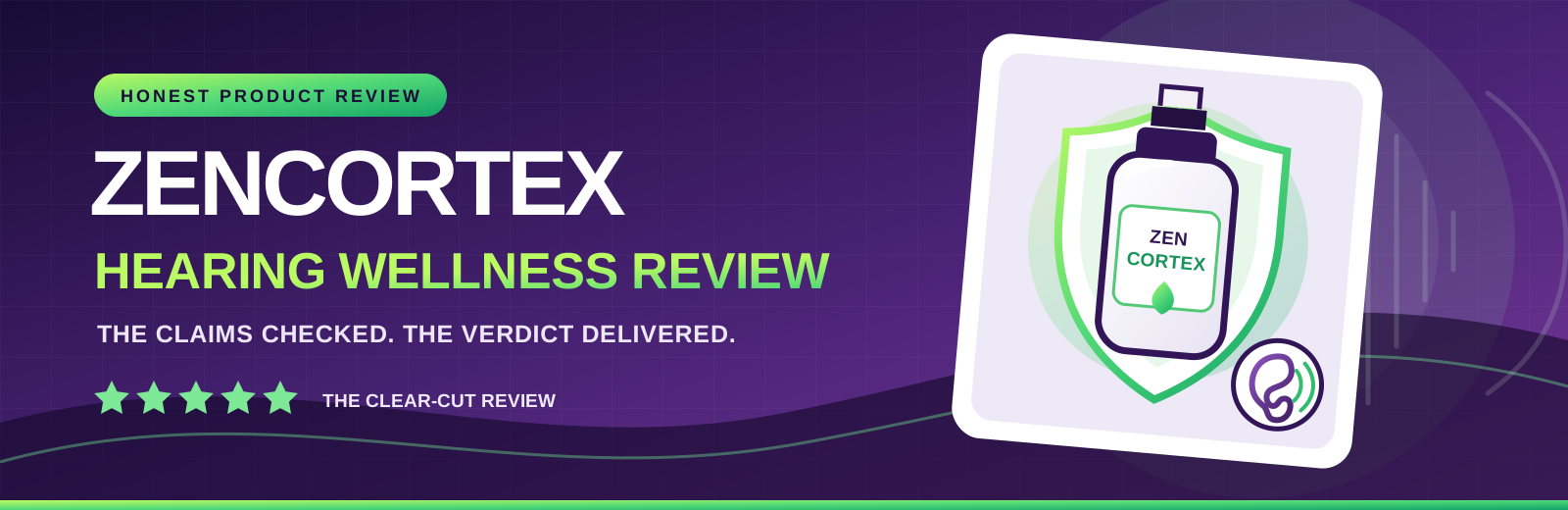
Comparing Top Hearing Supplements Based on Customer Reviews in 2026
Why customer reviews matter more than promises. Watch this video review of ZenCortex, with supporting context, key considerations and practical takeaways from the accompanying article.
Why Customer Reviews Matter More Than Promises
When people start browsing hearing supplement customer reviews, they are usually trying to answer one question fast: “Will this help me, and what will it feel like if it does?”
That is exactly why reviews are useful in 2026. Marketing language tends to describe broad outcomes like “support hearing health.” Customer ratings and hearing supplement user ratings comparison give you something more practical: patterns. People describe whether they noticed clearer speech, less fatigue after noisy situations, or fewer moments of “what did you say?”
From my experience in ear health conversations with patients and caregivers, the best review signals fall into three buckets:
- Consistency over time (not a one-day miracle)
- Specificity of use case (background noise, high-volume work, age-related decline)
- Real-world tolerability (did it cause stomach upset, headaches, or sleep changes)
That does not mean every review is accurate, and you still have to interpret them carefully. But review analysis becomes more meaningful when you compare brands side by side using the same criteria, rather than treating each product as a standalone.
What the “Best Rated Hearing Supplements” Usually Get Right
If you look closely at customer satisfaction hearing supplements in 2026, the top performers tend to share a few operational traits, even when their ingredient lists differ.
First, the formulation tends to focus on pathways linked to ear function and comfort rather than making aggressive claims. That does not guarantee results, but it often correlates with fewer complaints about side effects.
Second, the products that earn strong ratings often match how people actually take supplements. Customers commonly mention whether they took them with meals, whether they stayed on a consistent daily schedule, and whether they paired them with hearing protection in loud environments. Reviews for supplements that rely on a complicated routine usually show more variability in outcomes, because people stop, forget, or take them inconsistently.
Third, repeat themes show up in the better review threads: - Some users report feeling that speech becomes easier to track in background noise. - Others describe reduced “muffled” moments or less effort when watching TV. - A smaller group mentions changes in sound comfort, like less annoyance from certain frequencies.
You will also see trade-offs. A supplement that feels helpful for one person may do nothing for someone else, especially if their hearing issue is driven primarily by wax blockage, medication effects, sudden hearing loss, or an untreated ear condition. Reviews often reveal that mismatch, and it helps you filter out products that are unlikely to fit your situation.
How to Read Ratings Without Getting Misled
A simple star score rarely tells the full story. In 2026, the most informative hearing supplement review analysis I’ve seen comes from the details inside reviews.
Here are the review signals I prioritize when comparing candidates:
- Time-to-effect mentions (weeks, not days)
- Noise exposure context (workplace, commuting, hobbies)
- Symptom description (speech clarity, tinnitus comfort, muffling)
- Adherence notes (taken daily, taken with food, skipped doses)
- Side effect clarity (what happened, how soon, resolved or not)
These five points do not require you to trust anyone blindly. They help you estimate whether a brand's customer experience resembles the pattern you are hoping for.
Side-by-side Comparison: What Tends to Separate Brands in 2026
People usually search for “best rated hearing supplements” and expect one winner. In practice, the winners depend on why you are considering a supplement.
For example, if reviews repeatedly describe improved clarity after long screen time, that hints at a user population facing auditory fatigue. If reviews repeatedly mention discomfort in noisy rooms, that points to a different need. If reviews skew toward people already using hearing protection, those users may be responding to better overall ear support while their hearing damage risk is reduced.
In 2026, when I compare top candidates from a “customer reviews first” angle, I look for a few consistent differentiators:
- Ingredient transparency and dose clarity in the label Customers trust what they can understand. When labels are vague, complaints show up fast, especially around timing and how many capsules to take.
- Tolerance and “no surprises” feedback Brands that receive steady ratings with relatively low reports of nausea, headaches, or sleep disruption tend to stay in rotation.
- A realistic story in the reviews Higher-rated products often have fewer reviews that claim immediate restoration. Instead, users describe gradual changes, or they mention that results were subtle.
One pattern worth paying attention to is whether users discuss what they expected. A common reason people feel disappointed is that they expected “normal hearing overnight,” while the product is more likely to support hearing comfort or reduce strain. When a supplement has strong ratings, reviews typically include expectations that match the likely role of a supplement in ear health.
Where ZenCortex Fits the Review Conversation
In a category as mixed as hearing supplements, brands that earn sustained interest tend to show one thing in customer experiences: enough people report a noticeable shift in daily listening comfort to keep recommending it.
When you see repeated mentions that users felt better able to follow speech, that matters more than a single standout review. It also matters how users describe the improvement. “Easier conversations” is more meaningful than “everything sounds better,” because the first statement implies a real functional change, not vague positivity.
For buyers comparing ZenCortex-style options against other brands, the practical question becomes: do the review themes align with your specific listening challenges? If your main issue is speech clarity in noise, look for users who mention that exact scenario. If your main issue is sound annoyance, search for reviews describing comfort changes rather than clarity claims.
Matching a Supplement to Your Ear Health Reality
This part is where I urge people to stay honest about the driver of their hearing problem. Supplements can support ear health, but they do not replace the basics.
Consider these common scenarios that show up in customer reviews: - Users who likely had wax-related muffling often report inconsistent results, because wax is not fixed by supplements. - Users with chronic exposure to loud noise sometimes report the biggest benefit when they pair the supplement with better hearing protection. - People experiencing sudden changes or one-sided hearing loss should not delay medical evaluation. Reviews can't substitute for that.
If you are aiming to choose among top products in 2026 based on customer satisfaction, start by narrowing your goal. Are you trying to reduce fatigue after noisy environments? Improve speech understanding? Support tinnitus comfort? Your answer should influence what kind of reviews you accept as relevant.
A practical approach I’ve seen work is to pick one product, use it consistently, and track two things: - Your listening situations (dining out, meetings, TV, background noise) - Your effort level (how often you ask people to repeat, whether you strain to follow speech)
That turns hearing supplement user ratings comparison into something more actionable. Instead of chasing the highest star score, you are matching the product to a measurable daily experience.
The Takeaways That Hold Up When You Compare Reviews in 2026
If you strip away the hype and focus on hearing supplement review analysis, a few conclusions stand out.
First, the highest-rated products tend to have review patterns that are repeatable, not random. Second, tolerance often predicts whether people stick with a supplement long enough to see a change. Third, the best matches are usually the ones whose customer stories mirror your listening reality.
So rather than shopping for a single “best” brand, treat reviews like a filter. Look for consistency in how people describe improvement, and pay attention to how they take the supplement. When you do that, the comparison becomes more than a popularity contest, it becomes a decision that reflects your ear health needs in 2026.
And if you are considering ZenCortex within the broader set of options, use the same review lens: are customer experiences aligning with the specific outcome you want, and are the trade-offs reasonable for your day-to-day life? That is where the real signal is.
Related video pages
 2:19Herbal Tinnitus Remedy Review What Works for Ringing Ears in 2026
 2:56Comparing Hearing Wellness Reviews Which Products Deliver Real Results
 2:16Are Natural Hearing Drops Effective a Comprehensive Review in 2026
 2:15Comprehensive Hearing Support Review What Works Best for You
 2:46Comprehensive Hearing Health Review What Works and What Doesn't in 2026
 2:21Are Hearing Supplements Worth the Investment a 2026 Review