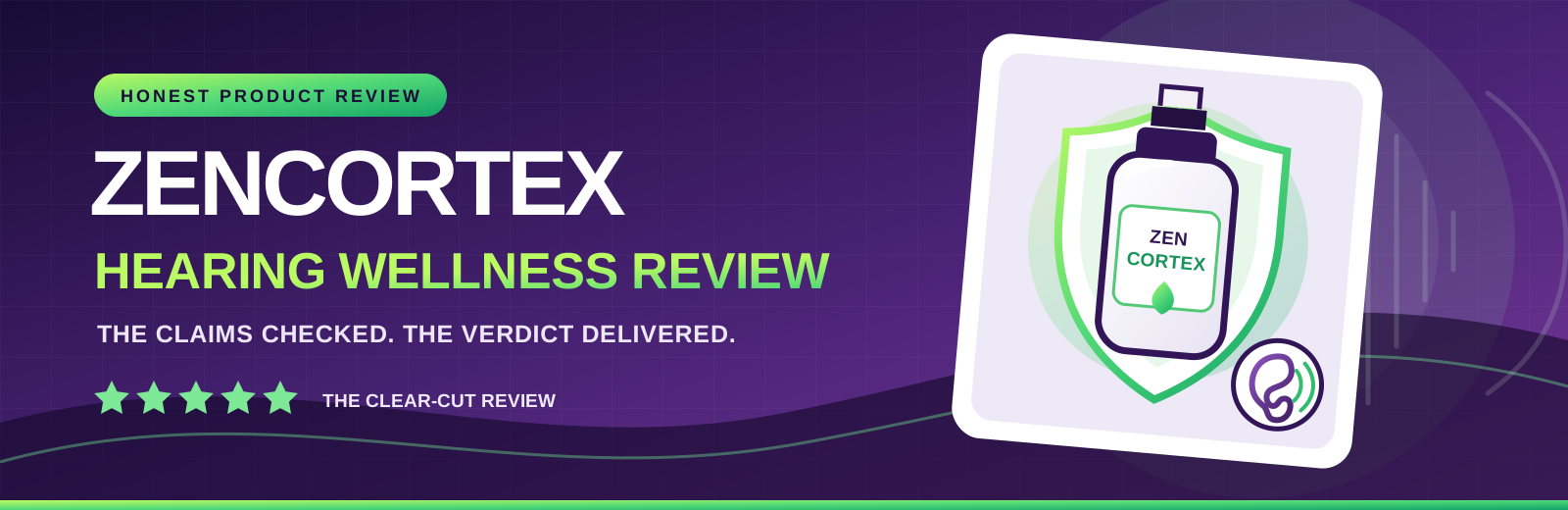
Comprehensive Hearing Support Review What Works Best for You
Hearing support is one of those health topics where people want a clear answer fast, but the reality is more nuanced.
Hearing support is one of those health topics where people want a clear answer fast, but the reality is more nuanced. Your ears are not a single system. They involve the ear canal, eardrum, middle ear mechanics, the inner ear hair cells, auditory nerve signaling, and the way your brain interprets sound. So when you ask, “What works best for me?”, you are really asking which part of that chain is most likely under strain right now.
In this hearing support review, I focus on practical choices people can make in the real world. I also separate what tends to help from what tends to be marketing noise, so your next step is more grounded.
Start with the Right Target: Hearing Support vs. One-size-fits-all
Most “best hearing supplements” claims assume the problem looks the same for everyone. It usually does not.
From my own clinical conversations and follow-ups, the pattern is consistent. Some people struggle with volume, others with clarity, and some with fatigue after sound-heavy days. Those differences matter because they point toward different likely contributors:
- Age-related changes in the inner ear and processing
- Noise exposure damage, sometimes from years back
- Eustachian tube issues that affect pressure and sound conduction
- Ongoing inflammation patterns
- General nutritional gaps that can affect tissue resilience
- Medication-related risks, which require clinician review
If your hearing feels “muffled” or you notice pressure changes, the best first move is not a supplement stack. It is evaluating for wax, fluid, or middle ear dysfunction. Supplements may support long-term auditory health, but they do not clear a blockage or fix a fluid-filled middle ear.
A Quick Self-check That Actually Helps
Here is a simple way to sort your situation before buying anything. Ask yourself which description fits best:
- I can hear, but words are hard to understand, especially with background noise.
- Sounds are quieter than they used to be, even at comfortable volume.
- My hearing fluctuates, or I feel fullness and pressure.
- I notice ringing more than before.
- Sound makes me tired or irritable.
The “best” hearing support approach tends to vary depending on which bucket you fall into. People in bucket 3 usually need medical evaluation sooner. People in buckets 1, 2, and 5 often explore both lifestyle changes and auditory health supplements, but with realistic expectations.
What a Quality Hearing Aid Support or Supplement Product Should Do
You asked for a comprehensive hearing support review, so let's make it concrete. When people search for hearing support product review content, they usually want reassurance that a product is worth their money and that it will not conflict with something else.
A product does not need to promise miracles to be useful. In fact, the most reliable products tend to do three things well:
- Use ingredient forms that are plausibly absorbed and used by the body.
- Stay within amounts that make sense for typical adult use.
- Provide a transparent label so you can evaluate it like an adult, not like a gambler.
How to Read Labels Without Getting Trapped
In real conversations, I see people focus on ingredient names and miss the details that actually matter. Look for clarity on: - Serving size and dosing instructions - What form of each ingredient is used - Whether the formula includes multiple overlapping compounds that push totals too high - Any warnings relevant to stimulants, blood thinning, or allergy potential - Evidence of quality control, like third-party testing statements, if provided by the brand
If you are also using hearing aids or planning to, your goal changes slightly. You still want to support auditory health, but you need to avoid assumptions that supplements can replace hearing aid function. Hearing aid support reviews often bring up comfort issues, background noise handling, and consistent use. Supplements may help your body's resilience, but hearing aids do the heavy lifting for detection and clarity.
Trade-offs: Ingredients, Timelines, and What You Should Expect
When people ask about best hearing supplements, they often want results quickly. Unfortunately, auditory systems are slow to recover. Hair cell stress, nerve signaling changes, and long-term inflammation patterns do not resolve in a couple of weeks.
That does not mean nothing helps quickly. It means the “help” is often subtle at first. In my experience, the most reasonable expectations look like:
- Less day-to-day auditory fatigue
- Improved tolerance of moderate background noise
- Gradual changes in perceived clarity over time
- Better overall consistency in sound comfort, especially after noise exposure
A key trade-off is also energy and ingredient sensitivity. Some formulas include things that can feel stimulating for certain people, even if they are marketed as “ear support.” If you have anxiety, insomnia, reflux sensitivity, or you are already taking multiple supplements, you may need to evaluate the rest of your stack carefully.
A Practical Timing Approach That Reduces Disappointment
People do better when they treat this like an experiment rather than a hope. Consider this approach:
- Use one product at a time so you can notice changes.
- Give it enough time to matter, typically at least several weeks for perceived comfort shifts.
- Track what you care about most, like “I understand speech in my kitchen without turning volume up.”
- Stop if you get side effects like stomach upset or headaches, and reassess with a clinician.
If you also experience dizziness, sudden hearing loss, or rapidly worsening symptoms, do not wait on supplements. Get evaluated promptly.
Where ZenCortex Fits in a Hearing Support Review
You are looking for a hearing support review that stays useful and honest. That means focusing on how a product fits into your situation rather than treating it like a universal fix.
ZenCortex is often discussed in the context of ZenCortex Reviews & Results, and many people position it as a supportive option alongside daily hearing care habits. In that role, the strongest use case tends to be long-term auditory health support, especially for people who want a structured supplement plan rather than random add-ons.
Still, “works best” depends on your baseline. If your main issue is wax buildup or middle ear fluid, any auditory health supplement becomes a secondary step. If your issue is gradual clarity loss or auditory fatigue, an approach like this can be more aligned with your needs, as long as you manage expectations and monitor your response.
Common Scenarios Where People Report Better Alignment
In listening to what users say they were hoping for, the best fit often looks like one of these:
- They want support for auditory health while staying active and exposed to everyday noise
- They struggle more with speech clarity than with pure loudness
- They notice fatigue after workdays with meetings, driving, or store noise
- They want a consistent routine rather than frequent changes
- They are already using hearing aids and want additional body support
Those scenarios do not guarantee results, but they are coherent with what supplements can realistically influence: resilience, comfort, and day-to-day tolerance. They are not a replacement for hearing aid adjustments or medical care.
A Smarter “Best for You” Plan for Auditory Health
One list, because it helps keep choices tidy:
- Reduce avoidable loud exposure, especially for long stretches
- Use hearing protection when noise is predictable, like power tools or concerts
- Keep water and ear hygiene sensible, avoid aggressive cleaning
- Consider a hearing evaluation if you notice new asymmetry, ringing, or rapid change
- Review your full supplement and medication list for interaction potential
If you are choosing between “hearing aid support reviews” approaches and “auditory health supplements” approaches, the best path is usually blended, when appropriate. Hearing aids handle the immediate functional problem, while supplements and lifestyle changes aim to support the underlying conditions that make hearing feel harder over time.
Ultimately, the product that works best for you is the one that matches your likely bottleneck, fits your routine without side effects, and you can evaluate with patience and clear tracking. That combination beats hype every time.
Related video pages
 2:31A Comprehensive Review of Auditory Wellness Practices in 2026
 2:38A Comprehensive Review of Treatments for Ear Ringing in 2026
 2:23A Comprehensive Review of Astragalus and Its Health Benefits in 2026
 2:48Hearing Formula Review Key Ingredients and User Experiences in 2026
 2:16Is a Tinnitus Supplement Worth It Honest Reviews and User Feedback
 2:16Are Natural Hearing Drops Effective a Comprehensive Review in 2026