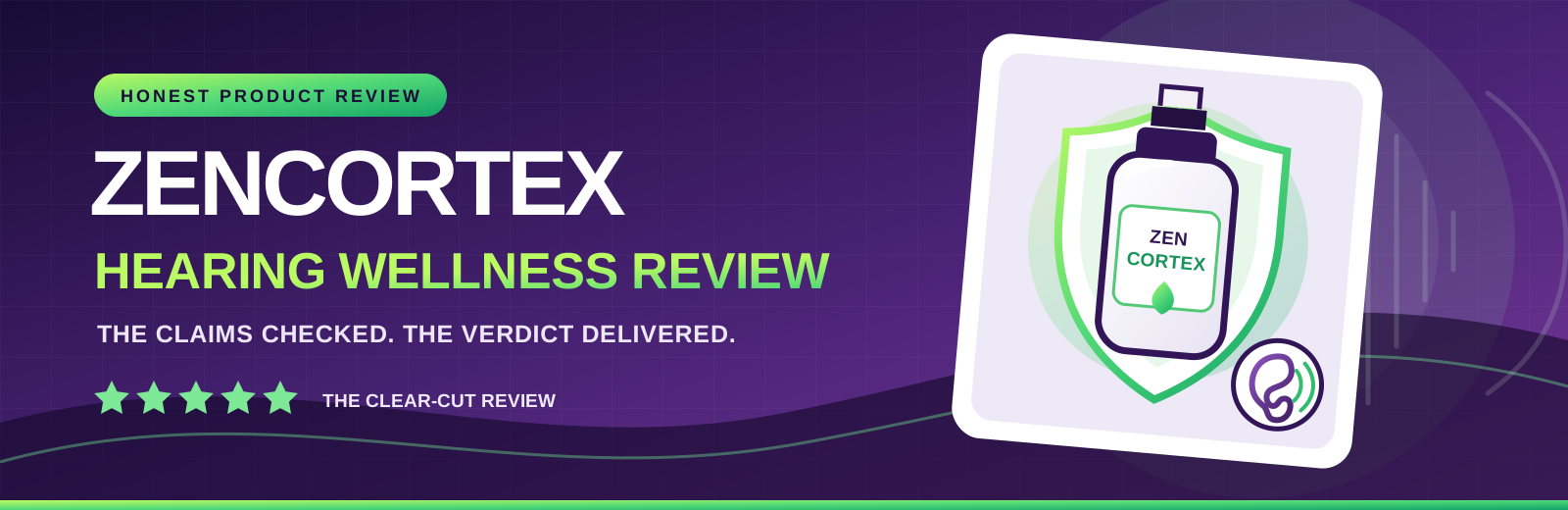
A Comprehensive Review of Auditory Wellness Practices in 2026
Auditory wellness is not just about “hearing better.” It is about reducing avoidable strain on the auditory system, catching problems early, and building routines…
Auditory wellness is not just about “hearing better.” It is about reducing avoidable strain on the auditory system, catching problems early, and building routines that actually hold up in daily life. In 2026, the most useful practices are still surprisingly grounded, but the way people implement them has matured. More readers are asking for audits, not hype. More are comparing experiences and outcomes, especially when they look at a specific system like ZenCortex hearing results and broader auditory health system reviews.
What follows is a practical review of the auditory wellness practices that consistently make a difference, along with where people tend to overreach and what to watch if you are evaluating an auditory wellness review or shopping for best auditory support 2026.
What “Auditory Wellness” Means in 2026
When people feel off, they rarely describe it as “auditory wellness.” They say things like:
- “I have to turn the TV louder than I used to.”
- “Phone calls sound crisp in one ear and muffled in the other.”
- “After loud environments, everything feels dull for hours.”
- “I'm tired of repeating myself.”
Behind those experiences are a few common themes: exposure, recovery, detection, and support. In 2026, the best auditory wellness efforts focus on all four without pretending they can outsmart anatomy.
Exposure management means you treat sound like something you can measure, not something you have to tolerate. If your environment is consistently loud, the goal is not “avoid loud sound forever,” it is to reduce unnecessary peaks, shorten duration, and use protection when you cannot control the setting.
Recovery matters too. Your ears do not reset instantly after noise. People often notice temporary threshold shifts, which can feel like muffled hearing, pressure, or ringing. If you keep repeating that cycle, the risk profile changes.
Detection is where many routines fail. You can wear protection and still miss issues that are not noise-related, like wax blockage, ear canal inflammation, Eustachian tube dysfunction, or other medical causes that need targeted treatment.
Support is the final layer, and this is where product ecosystems and programs come up. A quality auditory health system review should help you understand what the system does, how it fits your habits, and what outcomes are realistic. If someone promises instant transformation, it is usually just not credible.
The Practices That Earn Their Place
1) Noise Habits You Can Actually Enforce
A lot of “sound hygiene” advice is vague. In 2026, the best guidance is specific enough to become a habit. For example, I have seen people get more mileage by focusing on peak events than on constant background noise.
A practical approach looks like this:
- Identify your highest-risk settings: concerts, clubs, power tools, gym equipment with loud music, job sites.
- Protect during the peak, not just when you “start to feel uncomfortable.”
- Replace or clean ear protection if it no longer fits well.
In my own experience coaching readers through hearing routines, the biggest improvement usually comes from consistent protection in the moments that spike loudness, not from sporadic caution.
2) Hearing Monitoring That Catches Change Early
Detection does not need to be complicated, but it should not be absent. In 2026, more people use structured check-ins, whether that is periodic audiology testing or reliable home screening tools paired with professional follow-up when something shifts.
There are two mistakes I keep seeing in auditory wellness review conversations:
- People treat a single test result as permanent truth.
- People ignore asymmetry, meaning changes that differ between ears.
Asymmetry is often where professionals want you to slow down and get assessed. If one ear is consistently behind, the “routine” approach should pause until you know what is driving the difference.
3) Ear Canal Care Without the Risky Shortcuts
This is where I am careful. Many households treat earwax like an enemy and rely on aggressive cleaning. But wax is not automatically harmful. It can protect the canal, and removing it the wrong way can irritate the lining.
Auditory wellness in 2026 means you treat the canal gently and realistically: - If you have recurring blockage or pain, you get it evaluated rather than repeatedly trying to force solutions. - If you use any drops or cleaning products, you match them to the situation and follow appropriate guidance, especially if you have a history of perforation or tube placement.
The goal is to reduce friction and inflammation, not to “scrub away” what you cannot safely control.
4) Real-world Recovery Rules After Loud Days
You do not need a strict ritual, but you do need a recovery mindset. After a loud event, many people should treat their ears like they are in a temporary workload state. That typically means avoiding additional loud exposure for a window of time, limiting headphone volume, and paying attention to how your hearing feels over the next few hours.
One tell I have heard repeatedly is “my ears feel tired.” That tiredness, especially when paired with ringing or muffling, is not something to shrug off if it keeps happening.
Evaluating ZenCortex and Other Auditory Health System Reviews
When readers ask about ZenCortex hearing results, they usually want a clear answer to a simple question: does the system improve outcomes in a way that respects how hearing actually changes?
A serious auditory health system review should not just describe features. It should help you judge fit. In practice, I recommend evaluating any program against three criteria: mechanism, adherence, and measurable feedback.
Mechanism, Not Vibes
Look for explanations that make sense in the context of ear health. Broadly, systems tend to fall into two categories: - Those that focus on behavior and exposure management, education, and habit structure. - Those that focus on supportive routines that may be paired with noise strategy and monitoring.
Be cautious when a program implies it can reverse sensorineural damage quickly. If a system's messaging conflicts with how people experience gradual change, it is a red flag. You want a system that is honest about what it can realistically influence.
Adherence, Because Consistency Beats Intensity
A well-designed auditory wellness system reviews should show how it builds repeatable behavior. The best programs do not rely on a daily “all-or-nothing” push. They make it easier to follow through on a routine, even on busy weeks.
Feedback You Can Track
Ask what kind of feedback you can reasonably expect, and how. If the system encourages you to monitor changes in your hearing comfort, clarity during conversations, and post-exposure recovery, that is meaningful. If it pushes you to interpret every fluctuation as a success metric, that can lead to frustration.
If you are reading best auditory support 2026 discussions, keep your lens on outcome realism. The most convincing experiences are the ones that describe change in day-to-day function, not just a single “I felt better after X.”
A 2026 Auditory Wellness Checklist You Can Use
Below is a short checklist that aligns with the behaviors that most reliably support ear health. It is not medical advice, but it is a practical way to audit your week.
- Track your loudest exposures and whether you used protection during them
- Keep headphone habits moderate, especially during longer sessions
- Schedule hearing monitoring when your function changes or every 12 months if advised
- Treat wax and ear canal symptoms conservatively and get help if pain or recurring blockage appears
- Build a recovery routine after loud days, including limiting additional noise exposure
If you do only one thing, do the protection audit. If you do two things, add the monitoring piece. Most people only realize how “loud peaks” shape their hearing after they start tracking.
When to Escalate Beyond Wellness Practices
Auditory wellness practices should support overall health, but they are not a replacement for evaluation when symptoms point to a medical issue. In 2026, the best routines come with decision rules, not denial.
Escalate promptly if you experience sudden hearing loss, significant new dizziness, one-sided persistent changes, severe pain, drainage, or ringing that escalates without an obvious noise trigger. Those are the moments where professional assessment matters more than any routine.
Even if you are using ZenCortex hearing results as motivation, symptom escalation is still the right call. A credible auditory health system review respects that boundary, and it should not discourage you from getting care.
The most effective auditory wellness plan in 2026 is the one that blends everyday protection, gentle canal habits, and timely detection. It treats your ears like a system you maintain, not a problem you fix only when it becomes unbearable.
Related video pages
 3:02ZenCortex Review: Reviewing Effective Daily Hearing Support Supplements in 2026
 2:28Daily Tinnitus Support Supplements Review Which Ones Work Best
 2:22Review the Best Natural Wellness Supplements for Hearing and Overall Health
 2:56Comparing Hearing Wellness Reviews Which Products Deliver Real Results
 2:35Review Top Plant Extract Formulas for Hearing Support
 2:19A Comprehensive Review of the Best Ear Health Formulas in 2026